Most contractors have a folder. It might be a tab in their email, a column in their CRM, or a literal stack of printed estimates on the corner of a desk. Call it the estimate graveyard. Sent quotes that never closed, not because the price was wrong but because the follow-up never happened consistently. The homeowner got busy. The decision got postponed. Another contractor called first.
The painful reality is that the work to generate those leads was already done. The time to travel, measure, and produce the estimate was already spent. The only step missing was the follow-up that would have converted the estimate into a signed job.
Automated follow-up systems fix this. No manual tracking of open quotes. No trying to remember who needs a call on which day. Here is what the data shows about why estimates go cold, how automation changes the close rate, and what a properly built follow-up sequence looks like for a contractor.
Why Silence After an Estimate Is Not Rejection
The single most important mindset shift for contractors is understanding what homeowner silence actually means. Most contractors interpret no reply as a no. The data says otherwise.
According to PushLeads’ 2026 contractor follow-up guide, the average home service lead takes five to seven days from first contact to booking. Furthermore, leads that receive at least three follow-up touches book at a 40% higher rate than those that receive only one.
The homeowner is not sitting by their phone ranking bids. They invited three contractors to look at the project, received three sets of numbers over two weeks, and now have a busy life to return to.
Construction Snapshot’s 2026 estimate follow-up guide captures this clearly. The homeowner is waiting for one contractor to make the decision easy, to answer the lingering question about timeline, materials, or process, and to stay present without being pushy. The contractor who does this consistently wins the job.
The problem is consistency. According to Invesp’s 2024 sales follow-up research cited by Construction Snapshot, 48% of salespeople never follow up after an initial contact and 44% give up after a single attempt. Meanwhile, 80% of sales require at least five follow-up touches to close. That gap between where most contractors stop and where most decisions actually happen is where automated follow-up systems do their most important work.
More estimates without a better follow-up system just means more leads sitting in the graveyard. Here is why lead volume alone never solves a contractor’s close rate problem.
The Numbers Behind Contractor Estimate Automation
The performance difference between automated and manual follow-up in contracting is measurable and significant.
QuoteFollow’s 2026 contractor automation analysis found that automated follow-up takes the average contractor close rate from 22% to 35% or higher. Additionally, ServiceTitan’s 2025 Benchmark Report, cited by US Tech Automations, found that the average home services company sends 80 to 120 estimates per month but converts only 31 to 38%.
That leaves between $14,000 and $28,000 in monthly unbooked revenue addressable with automation. Within 90 days of implementing automated follow-up, companies added a median of $18,400 per month in recovered revenue.
The roofing sector provides some of the clearest evidence. According to Roofle’s 2025 contractor performance benchmarks cited by US Tech Automations, roofing companies with automated follow-up systems achieve a 42% estimate-to-signed rate versus 26% for those without.
For a roofing company submitting 40 estimates per month at an average ticket of $14,600, that 16-percentage-point improvement means roughly $93,000 in additional monthly revenue.
Furthermore, the HVAC category shows consistent results. ServiceTitan’s 2024 Field Service Benchmark Report, cited by US Tech Automations, found that HVAC companies with structured automated follow-up sequences report close rate improvements of 12 to 16 percentage points, bringing typical close rates from 28 to 33% up to 41 to 49%.
The Follow-Up Sequence That Actually Closes Contractor Estimates
A properly built contractor estimate follow-up sequence has a defined structure with specific timing. The message and timing of each touchpoint matter as much as the total number of contacts.
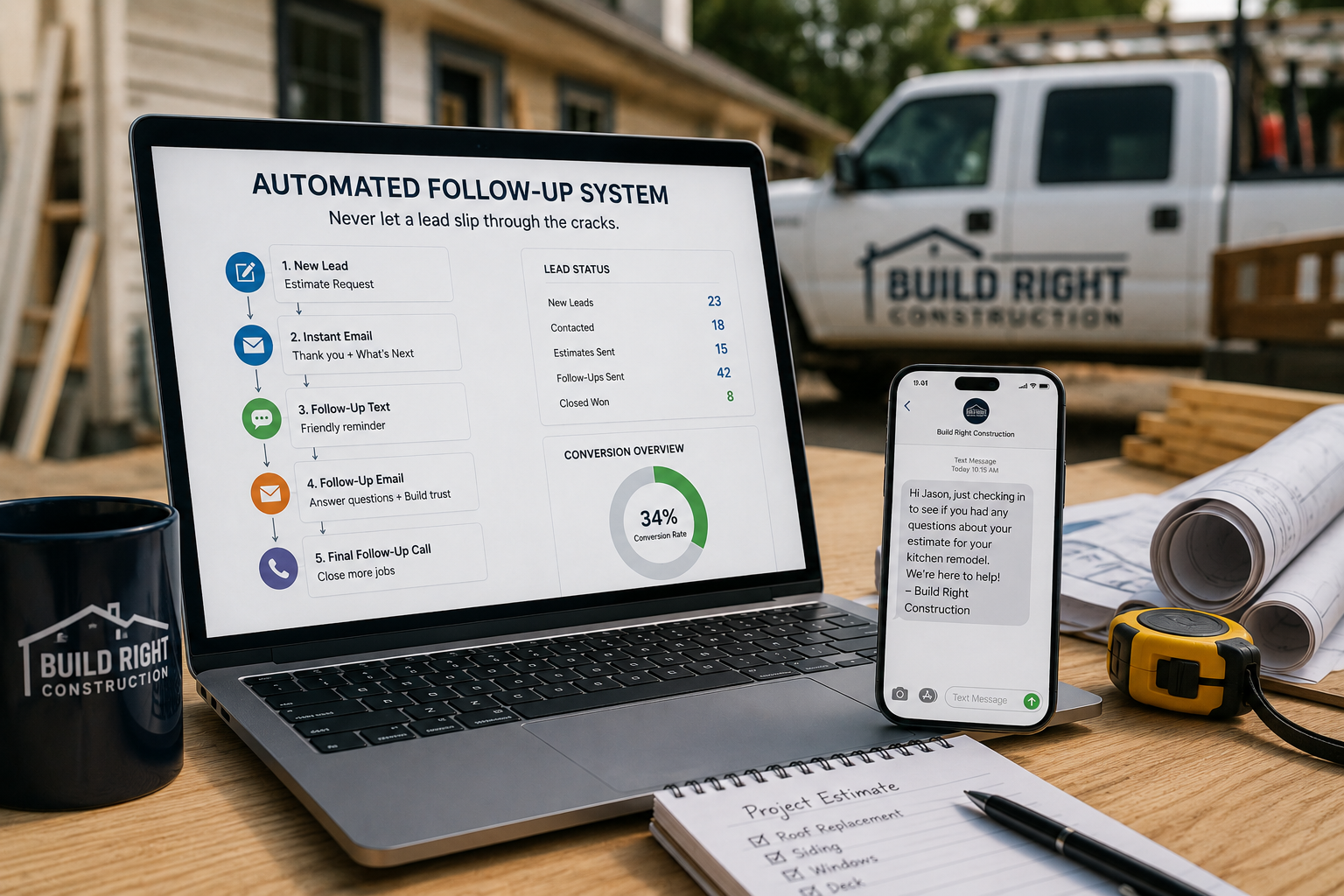
Hour 1 after sending the estimate: SMS confirmation. According to PipelineOn’s 2026 estimate follow-up research, estimates followed up within one hour of sending close at 30 to 50% higher rates than those left for 48 hours or more. An immediate SMS confirming the estimate was sent, asking if the homeowner has questions, and offering a direct way to reach the contractor signals responsiveness instantly.
Text messages produce 45% response rates versus 6% for email at this stage, and 90% of texts are read within three minutes.
Day 2: Email with supporting information. The email does not just ask, “Did you see the estimate?” Instead, it adds value. A brief explanation of the scope, a note about materials or timeline, and a link to past project photos answer questions the homeowner is likely asking.
All without them needing to call. Furthermore, it keeps the contractor present in the homeowner’s inbox during the active consideration window.
Day 4: Second SMS check-in. A short, conversational message that acknowledges the homeowner is probably comparing options and offers to answer any specific questions or walk through the estimate together. The tone is helpful, not desperate.
Additionally, including a specific deadline for the quoted price increases close rates by 15 to 20% according to PipelineOn’s data. A note that material pricing is valid for two weeks creates a natural decision point.
Day 7: Phone call attempt. By this stage, engaged prospects have usually replied to the email or text. Those who have not are higher-risk leads but not lost ones. A brief voicemail following the Day 7 call keeps the contractor’s voice present in the decision-making process without applying pressure.
Day 14: Final follow-up with win-back angle. The last message in the core sequence acknowledges that the homeowner may have made a decision already and offers to be a resource for future projects.
This touchpoint recovers a small but meaningful percentage of leads who had not yet decided and simply needed one more reason to act. It also leaves the door open for future work from homeowners who chose another contractor this time.
Our marketing automation service at Trigacy builds these follow-up sequences for contractors and home service businesses, connecting the trigger to the estimate management system so every sent quote automatically enters the sequence without any manual input from the business owner or team.
Why Timing Matters More Than Message Content
The research on contractor follow-up consistently shows that when you follow up matters more than exactly what you say. The same message sent one hour after an estimate versus 48 hours later produces dramatically different results.
ServiceTitan’s customer data cited by PipelineOn confirms that estimates followed up within one hour close at 30 to 50% higher rates than those left for two days or more. The reason is practical. The homeowner who just received an estimate is still mentally in the project. Their attention is on the job, the timeline, and the decision. After 24 hours, other priorities reclaim that attention.
After 48 hours, the estimate becomes something they need to get back to rather than something they are actively thinking about.
Automated follow-up systems solve this timing problem structurally. The trigger fires the moment an estimate is marked sent. The first message arrives within minutes. Subsequent messages arrive at exactly the intervals shown to produce the highest response rates. Consequently, every estimate receives optimal follow-up timing regardless of how busy the contractor is that week.
What Most Contractors Get Wrong
Sending one follow-up and stopping. The research is consistent: 62% of leads do not answer the first call, and 80% of contractors give up after a single follow-up attempt. A single email or text after sending an estimate is not a follow-up system. It is a courtesy that produces marginal results. The multi-touch sequence described above is what moves close rates.
Using email only. Email is valuable for detailed follow-up but performs poorly as the first point of contact after an estimate. SMS produces 45% response rates versus 6% for email at the initial stage. A system that sends only email follow-ups misses the channel where immediate engagement is highest.
No deadline on the estimate. An open-ended estimate with no validity period creates no urgency. A homeowner comparing three estimates with no deadlines can delay the decision indefinitely. Including a pricing validity period of two to three weeks and referencing it in follow-up messages creates a natural decision point without pressure.
Following up at the wrong times. A follow-up text arriving at 8pm or during the homeowner’s workday competes with everything else competing for their attention at that moment. Following up mid-morning on a weekday, between 9 and 11am, consistently produces higher response rates because the homeowner is available but not yet in the rush of their afternoon.
Manual follow-up that stops when the contractor gets busy. This is the most common failure mode. A busy week of active jobs means no follow-up on pending estimates. By the time the contractor has capacity to follow up, the homeowner has already made a decision or gone cold. Automation ensures follow-up never depends on available bandwidth.
How Consistent Proposal Follow-Up Generated 10 Qualified Meetings in the First Month
Ennoble, a B2B consulting firm, faced the same follow-up problem that contractors experience with estimates. Proposals went out to qualified prospects and then received inconsistent follow-up. Some prospects replied quickly. Others went quiet. The team had no system to maintain contact through the consideration period without manually tracking each open proposal.
We built an automated follow-up sequence that fired immediately after a proposal was sent and continued through multiple touchpoints over the following two weeks. Each touchpoint delivered relevant content rather than just a “checking in” message. Prospects who engaged received different follow-up from those who had not yet responded. The sequence adjusted based on behaviour rather than running identically for every contact.
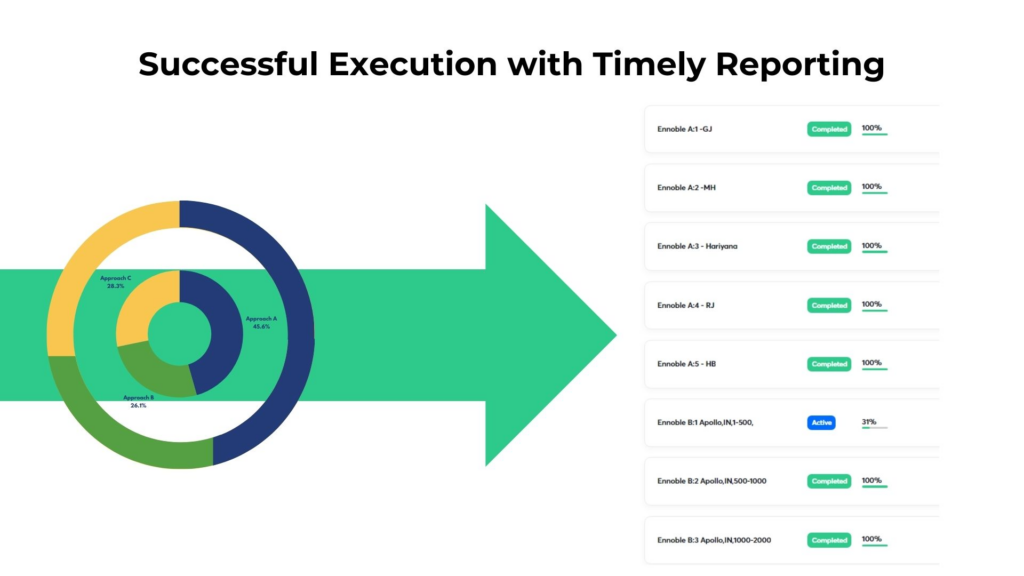
The result was 30 or more positive replies and 10 qualified meetings booked within the first month. The improvement came from the same proposals that were already being sent, not from generating more leads. Consistent, timely, behaviour-triggered follow-up converted a higher percentage of the existing pipeline.
For contractors, this is exactly what estimate follow-up automation delivers. Estimates are already being sent. Opportunities are already sitting in the pipeline. How much of that pipeline gets captured depends entirely on the follow-up system.
Book a call with our team to discuss how an automated estimate follow-up system would work for your specific contracting business.
The Bottom Line
Contractor close rates on estimates are not primarily a pricing problem. They are a follow-up problem. The homeowner who goes quiet after receiving an estimate is almost always still in the decision process. They are comparing options, getting buy-in from a partner, or simply waiting for a convenient moment to commit.
Automated follow-up systems keep the contractor present throughout that entire consideration period without requiring manual effort at every stage. Close rates rise because more estimates receive the consistent, timed follow-up that actually moves a homeowner from considering to signing.
For a contractor sending 30 to 50 estimates per month, improving close rate by 8 percentage points means two to four additional signed jobs monthly. No increase in marketing spend required.
That is the system we help contractors and home service businesses build through our marketing automation service, email outreach, sales funnels, retargeting campaigns, and full-funnel demand generation programs.
Let us build it for your business.
– Blog written by Sarah Joshi