
A roofing estimator finishes an inspection, promises the homeowner a proposal by Thursday, and drives to the next job. Thursday comes and goes. The proposal never gets sent because the estimator was on a roof all day and the reminder lived only in his memory. By the time he remembers on Saturday, the homeowner has already signed with the competitor who followed up on time.
This is the roofing sales leakage problem. It is not a lead generation problem. The lead was there. The inspection happened. Interest was real. But the job was lost because a follow-up task fell through the cracks. A busy field team and a manual tracking system that depends on memory cannot hold every open task, especially when the team is twenty feet in the air.
CRM task automation closes that gap. It assigns the right task to the right person at the right stage automatically, so no follow-up depends on memory. Here is what the data shows about roofing revenue leakage, how automation prevents it, and what a properly built system looks like for a roofing operation.
Why Roofing Sales Leak More Than Most Industries
Roofing has a specific operational reality that makes manual follow-up especially unreliable. The sales team is not sitting at desks with a pipeline view in front of them. They are on job sites, on roofs, and in trucks between appointments. The moments when a follow-up needs to happen rarely coincide with the moments the team has a phone and a spreadsheet in hand.
This creates a structural gap. According to Projul’s 2026 roofing CRM analysis, roofing teams routinely forget to call prospects back, miss scheduled estimates, and lose track of where each lead stands in the sales process. Important details about customer preferences and project requirements get lost between team members.
When the team works from different locations and job sites, nobody has access to current lead information. This leads to duplicate efforts and confused customers receiving multiple calls about the same project.
The financial impact is significant. According to Projul’s data, roofing companies using dedicated CRM systems with automated follow-up typically see 20 to 30% improvements in close rates. That improvement does not come from generating more leads. It comes from converting more of the leads the company already has, by preventing missed appointments and forgotten callbacks that cost contractors business.
The Numbers Behind CRM Automation in Sales
The performance case for CRM automation is well documented across sales organisations and applies directly to roofing.
According to Method’s 2026 CRM statistics cited by Wave Connect, CRM automation reduces sales cycles by 8 to 14% and significantly reduces missed opportunities. Furthermore, companies using CRM are 86% more likely to exceed their sales goals than those without, according to SLT Creative data cited in the same analysis. Most businesses see positive CRM ROI within 12 months, with initial benefits appearing within 90 days.
The speed-to-lead factor is especially critical in roofing. According to LeadSpheres’ 2026 roofing CRM analysis, roofing contractors lose leads to competitors specifically because they cannot answer the phone while on a ladder. The CRM systems that recover the most revenue respond to missed calls automatically within seconds, before the homeowner moves on to the next roofer on their list.
A roofer who is physically unable to respond in the moment still captures the lead because the system responds on their behalf.
Additionally, roofing sales pipelines have transitions that generic systems miss. According to Projul’s research, roofing companies that use generic pipeline stages like “Prospect, Qualified, Proposal, Closed” miss critical transitions in their process.
A lead that has been inspected but is waiting on insurance approval is at a completely different stage than one waiting on a proposal. Task automation built around roofing-specific stages ensures the right next action fires at each real transition point.
What CRM Task Automation Actually Does for Roofers
CRM task automation assigns and triggers the next action automatically as each lead moves through the roofing sales pipeline. Nobody has to remember to create the task, and nobody has to remember to do it on time.
Automatic lead routing. When a new lead arrives from a form, an ad, a chat, or a missed call, the system routes it to the right estimator or sales rep instantly. No lead sits unassigned in an inbox while the team is in the field. According to Roofing Automation Hub’s 2026 guide, new leads should be routed automatically because without structured tracking, leads can be mishandled or forgotten.
Task assignment by sales stage. According to ServiceTitan’s roofing CRM analysis, the system assigns next steps automatically as opportunities move from stage to stage, from site survey to proposal follow-up. When an inspection is marked complete, the proposal task fires automatically. When a proposal is sent, the follow-up sequence begins. The estimator does not have to set a reminder. The system sets it.
Automated follow-up reminders and sequences. For the tasks that a human still needs to perform, the system sends reminders at the right time. For the touchpoints that can be automated entirely, such as a proposal follow-up text or an appointment confirmation, the system sends them directly. This combination ensures consistent communication regardless of how busy the field team is.
Mobile field updates. Modern roofing CRMs let crews update job stages, upload photos, and add notes directly from their phones on the job site. Those updates flow to the office automatically without separate calls or manual data entry. Consequently, the pipeline stays current in real time, and the automated tasks fire based on accurate, up-to-date stage information.
Our marketing automation service at Trigacy builds these task automation workflows for roofing and home service businesses. The system connects lead capture, pipeline stages, and follow-up sequences into one flow that prevents opportunities from falling through the cracks.
The Roofing Sales Stages That Need Task Automation Most
Certain points in the roofing sales pipeline leak more revenue than others. These are where task automation delivers the most value.
New lead to first contact. The gap between a lead arriving and the first response is where the most leads go cold. Automated routing and instant response ensure the roofer is the first to reach the homeowner, which strongly influences who wins the job.
Inspection to proposal. The estimator who completes an inspection and then gets buried in field work is the most common point of leakage. An automated task that fires the moment the inspection is logged, plus a reminder if the proposal is not sent within the target window, closes this gap directly.
Proposal to decision. Most homeowners do not sign immediately after receiving a roofing proposal. They compare, they check with a partner, they wait. The roofer who follows up consistently during this window wins a disproportionate share of these decisions. Automated proposal follow-up sequences maintain that contact without depending on the estimator to remember every open proposal.
Insurance-related transitions. For insurance-related roofing work, the pipeline includes waiting periods tied to adjuster approvals and claim processing. These transitions are easy to lose track of manually. Automated tasks tied to these specific stages ensure the roofer follows up at exactly the right moment when the claim status changes.
Post-job review requests. After a job completes, a review request sent at the right moment builds the online reputation that generates future leads. Automating this request ensures it happens for every completed job, not just the ones someone remembered to ask about.
What Most Roofing Companies Get Wrong
Relying on memory and spreadsheets. A whiteboard, a spreadsheet, or an estimator’s memory cannot reliably track dozens of leads across multiple stages while the team is in the field. This is the root cause of most roofing sales leakage. The fix is a system that tracks and triggers automatically rather than depending on people to remember.
The leads are not the problem for most roofing companies. The follow-up system is. Here is why owning that follow-up process is what separates roofers who close from those who lose jobs they already earned.
Generic pipeline stages. Using standard sales stages that do not reflect the real roofing process, especially the insurance-related waiting periods, causes the CRM to miss the transitions where follow-up actually matters. Roofing-specific stages with roofing-specific task triggers are essential.
No automated response to missed calls. A roofer who cannot answer the phone on a job site loses the lead unless something responds automatically. A missed-call text-back that fires within seconds keeps the lead warm until the estimator can call back. Without it, that lead often goes straight to a competitor.
Inconsistent proposal follow-up. Sending one proposal and waiting is not a follow-up strategy. Most roofing decisions happen after multiple touchpoints. Automated proposal follow-up sequences convert significantly more open proposals than relying on the estimator to manually chase each one.
No connection between field and office. When the field team’s updates do not flow automatically to the office system, the pipeline is always out of date and the automated tasks fire on stale information. Mobile field updates that sync in real time keep the whole system accurate.
How Automated Follow-Up Drove $1.36M in Pipeline for a Home Improvement Business
GTO Florida, an architectural outdoor living solutions company, operated in a home improvement category with the same follow-up challenge roofing companies face. Leads arrived from multiple channels and needed consistent, timely follow-up to convert. Manual handling created gaps between lead capture and response, and those gaps cost the business opportunities.
We built a system that combined lead generation with automated CRM pipelines and behaviour-triggered follow-up sequences. When a prospect entered the funnel, they were routed into a multi-step follow-up sequence automatically.
If a contact went quiet for 48 hours, the next touchpoint fired without anyone needing to remember it. The system tracked every lead and every follow-up, ensuring consistent engagement even when the team was occupied with other work.
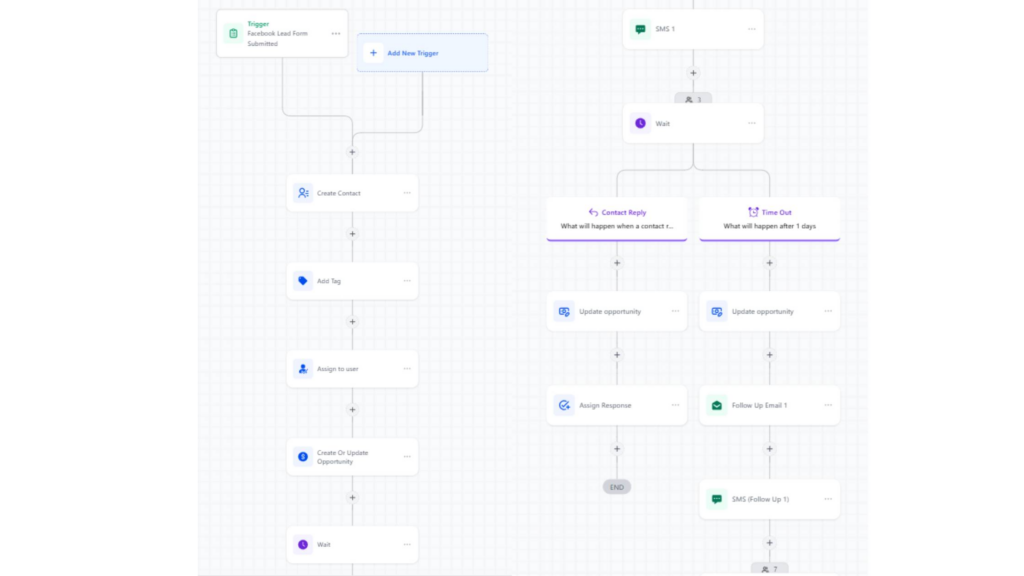
The results demonstrate what automated follow-up produces. This system generated 2,697 qualified leads at an average cost of $6.79 per lead. It achieved a 36.30% email open rate across nurture sequences. And it drove more than $1.36 million in tracked pipeline opportunity.
The principle carries directly into roofing. When every lead is captured, routed, and followed up automatically, the opportunities that manual tracking would have lost get converted instead. The system does the remembering so the field team does not have to.
Book a call with our team to discuss how CRM task automation would work for your specific roofing operation.
The Bottom Line
Roofing companies lose jobs they already earned. The lead responded. An inspection happened. Interest was genuine. Then a follow-up task fell through a gap because the team was in the field and the tracking system depended on memory.
CRM task automation removes that dependency. Leads route automatically. Tasks fire at each pipeline stage without anyone setting a reminder. Follow-up sequences run consistently regardless of how busy the crew is. Missed calls get an instant response even when the estimator is on a ladder. The result is a higher close rate on the same lead volume, because fewer opportunities slip through the cracks.
For roofing companies competing in markets where the first responsive contractor often wins the job, this is one of the highest-return operational investments available. The leads are already coming in. The question is how many are being lost to a missed task that automation would have caught.
That is the kind of system we help roofing and home service businesses build through our marketing automation service, sales funnels, retargeting campaigns, email outreach, and full-funnel demand generation programs.
Let us build it for your roofing company.
– Blog written by Sarah Joshi