A potential patient is deciding whether to book an appointment with a specialist they have never met. The experience cannot be trialled first or returned if it disappoints. The decision carries consequences that choosing a restaurant or buying a product simply does not.
So they do the only thing available to them: they look for evidence that others like them made this choice and it worked.
This is the healthcare trust problem. Credentials, location, and insurance acceptance all matter. However, what actually moves a hesitant prospect to book is not a list of qualifications. It is a real person on a screen saying “I was nervous too, and here is what happened.”
Video testimonial ads provide exactly that. They bring authentic patient voices into the moment when a prospective patient is researching and deciding. No marketing format does this better. Here is why the data supports it, how to produce testimonials that actually convert, and what compliance requires in a healthcare context.
Why Trust Is the Primary Purchase Driver in Healthcare
Healthcare is different from almost every other category. The purchase is not impulsive. The stakes are personal, physical, and sometimes irreversible. Patients spend significantly more time researching healthcare providers than they spend researching most other major purchases.
According to a 2024 survey by Software Advice cited by iStudiosMedia, 94% of patients use online reviews to evaluate physicians before booking. Furthermore, Medical Economics 2025 data cited by Evokad shows that 51% of patients read at least six reviews before making a decision.
In healthcare, this principle is truer than in any other category. Trust is not a nice-to-have. It is the only thing that moves a patient from researching to booking.
Additionally, 40% of patients have cancelled appointments or avoided booking due to negative online feedback. This happened even when friends and family had recommended the same provider.
The volume of social proof matters enormously. Providers with 50 or more reviews receive 10 times more bookings than those with fewer than 10. Providers with 100 or more reviews see a 27-fold increase in patient bookings compared to those with fewer than 10, according to the same Medical Economics research.
Video testimonials are the premium tier of that social proof. They go beyond star ratings and written reviews by showing the real person, conveying genuine emotion, and allowing the prospective patient to assess whether they identify with the person speaking. That identification is what bridges the gap between interest and booking.
What the Data Shows About Video Testimonials in Healthcare
The performance data for video in healthcare marketing is consistent and strong.
According to NetOneClick’s video marketing power analysis, 82% of individuals have been persuaded to buy a product or service after watching a video. Furthermore, 72% of businesses say video has improved their conversion rate. Additionally, health-related videos were watched 110 billion times globally in 2024, according to CallRail data, confirming that patients actively seek video content when making health decisions.
Teleprompter’s 2025 video testimonial statistics add further context. In 2024, approximately 39% of marketers used video testimonials as part of their strategy. Moreover, 74% of major companies produce at least five video testimonials per year. The gap between large healthcare systems and independent practices on this metric is significant.
Independent practices that build video testimonial libraries close that credibility gap with brand awareness that would otherwise take years of reputation-building to achieve.
Healthcare Marketing Vault’s 2025 and 2026 healthcare marketing trends analysis identifies video-centric trust as a defining trend. Thirty-second clips of real patient stories and day-in-the-life provider content consistently drive higher engagement than any other format.
Consequently, practices that incorporate patient testimonials into their paid social and retargeting campaigns see measurable improvements in appointment booking rates from the same ad spend.
Why Video Outperforms Text Testimonials in Healthcare Specifically
Text reviews are the baseline. Video testimonials are the conversion driver.
The gap between them comes down to what each format conveys. A text review says a patient was satisfied. A video testimonial shows what satisfaction looks like. The viewer sees the patient’s face, hears their voice, observes their body language, and experiences the emotional reality of their journey. All of these signals bypass the logical evaluation process and speak directly to the prospective patient’s emotional decision-making.
Influencer Marketing Hub’s video testimonial statistics confirm that 87% of consumers say video quality affects their trust in a brand. In healthcare, where the brand is a medical practice and the trust question is whether a stranger can be trusted with your health, this quality effect is amplified significantly.
Furthermore, video testimonials allow for specificity that text cannot match. A patient can describe the exact fear they had before a procedure. They can explain what the clinic’s staff did to address it. They can share the outcome three months later. That level of detail is what turns a hesitant researcher into a booked patient.
How to Use Video Testimonials as Paid Ads
A video testimonial sitting on the practice’s website is an asset. The same video running as a paid Meta or YouTube ad is a patient acquisition campaign.
The paid ad format changes the audience significantly. A website video is seen by people who have already found the practice and are actively evaluating it. A paid testimonial ad reaches people who have not yet considered the practice, placing a trusted peer recommendation in front of them at exactly the moment they are browsing relevant content.
The most effective structure for healthcare video testimonial ads follows four stages.
Stage 1: Patient identification hook (first 5 seconds). The opening statement must create immediate identification for the target patient. “As a busy mum of three, I kept putting off my back pain” speaks directly to a specific person. “I was terrified about having surgery” speaks to a universal healthcare fear. The hook must make the target patient feel that this video was made for them.
Stage 2: The before story (10 to 15 seconds). The patient describes their situation before treatment. The pain, the hesitation, the reason they waited. This section does the emotional work of showing the prospective patient that someone in their situation chose to act. The before story is where identification deepens into resonance.
Stage 3: The experience (10 seconds). The patient briefly describes what the process was like. The staff, the communication, the feeling of being cared for. This addresses the specific anxieties a prospective patient has about the practice itself, not just the outcome.
Stage 4: The outcome and CTA (10 seconds). The patient describes their life after treatment. Then a direct call to action: “If you have been putting this off, do not wait as long as I did.” Our retargeting campaigns at Trigacy deploy these video testimonial ads to warm audiences. These are people who have visited the practice’s website or engaged with previous content.
Prior brand exposure combined with authentic social proof produces the highest conversion rates at this stage.
Additionally, our social media advertising service at Socinova runs these testimonial ads as cold audience campaigns on Meta and YouTube. Demographic and interest targeting ensures prospective patients match the profile of the speaking patient in the testimonial.
Compliance and Ethics: What Healthcare Video Ads Must Get Right
Healthcare video testimonials carry compliance obligations that no other category faces to the same degree. Getting this wrong creates legal and reputational risk that outweighs any marketing benefit.
Written patient consent. According to Rafferty Weiss’s 2026 healthcare video ad guide, documented written consent is required for every patient who appears on screen. That consent must specify exactly how the footage will be used, including paid advertising placement. Verbal agreement on the day of filming is not sufficient protection.
No individually identifiable health information without authorization. HIPAA requires a specific patient authorization before any protected health information can appear in marketing materials. If the patient’s condition, diagnosis, or treatment is identifiable from the video, that authorization must be explicit, written, and specific to marketing use.
State-specific testimonial restrictions. According to InfluxMD’s 2026 lead conversion research, four US states, including Illinois, Kentucky, New York, and West Virginia, currently prohibit patient testimonials in healthcare marketing entirely. Practices in these states must seek legal advice before publishing any patient testimonial content.
FTC accuracy requirements. The FTC requires that testimonials reflect the genuine, typical experience of patients. In 2025, the FTC took action against a telehealth provider for misleading testimonials, resulting in a $150,000 settlement. Claims about outcomes must be representative and substantiated, not exceptional cases presented as typical results.
All scripts and final cuts require legal review. Before any patient testimonial goes live as a paid ad, the script and the final edited video should clear a legal review process. This is particularly important for specialties involving surgical procedures, weight loss, mental health, or aesthetic outcomes.
What Most Healthcare Practices Get Wrong With Testimonial Ads
Filming testimonials that feel scripted. A patient who recites prepared talking points delivers a video that looks like a television commercial. Viewers recognise the format immediately and discount the authenticity. The most effective testimonials are conversational, slightly imperfect, and delivered in the patient’s own words. The role of the production team is to ask the right questions, not to write the answers.
Using only exceptional outcomes. A patient who recovered twice as fast as expected, achieved results beyond what was typical, or experienced a uniquely smooth process creates a testimonial that prospective patients struggle to identify with. The most effective testimonials feature relatable patients with representative outcomes. Prospective patients are asking “will this work for me?” not “is this a miracle story?”
No distribution strategy for the testimonial. Many practices film a patient testimonial, post it once to their social media, and consider the job done. A testimonial deployed as a paid retargeting ad, embedded on a service-specific landing page, included in email follow-up sequences, and used as a YouTube pre-roll ad reaches every stage of the patient consideration journey.
One piece of content can run in multiple channels simultaneously with our marketing automation infrastructure at Trigacy.
Missing the compliance step. Filming before obtaining written consent and legal review is not just an ethical failure. It is a potential HIPAA violation and FTC enforcement risk. Building the compliance process into the production workflow before filming starts is the only reliable approach.
Not targeting by patient profile. A testimonial from a 65-year-old patient recovering from hip surgery should not run as a paid ad targeting 35-year-old women. The most effective testimonial campaigns match the speaker to the target audience demographic so identification is immediate and the message lands precisely.
How Trust-Driven Healthcare Campaigns Generated 25 Qualified Leads Per Month
CGA Weight Loss operates in a healthcare category where the trust barrier between interest and consultation booking is among the highest available. Weight loss surgery is a significant, life-altering decision. Prospective patients research for months. They compare providers extensively. They need substantial evidence that others in their situation made this decision and experienced positive outcomes before they feel ready to contact a clinic.
The campaign system we built incorporated patient social proof as a central trust signal throughout the acquisition funnel. Rather than relying on clinical credentials and pricing information alone, the campaigns spoke to the patient’s lived experience.
Messaging reflected the fears, hesitations, and eventual outcomes that real patients go through. The targeting ensured that prospective patients who matched the demographic and psychological profile of successful past patients saw the most relevant trust signals.
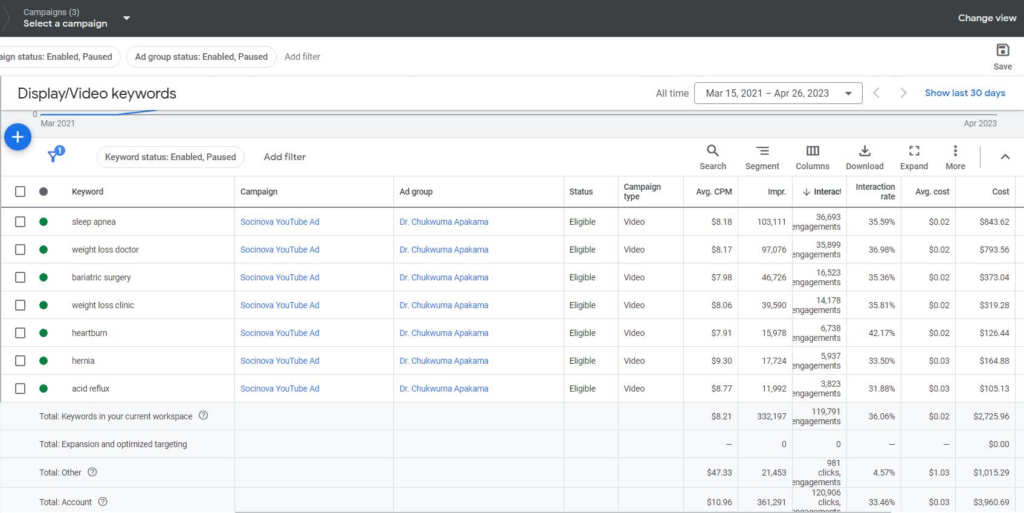
The result was 25 or more qualified leads per month at a consistently lower cost per acquisition. These were patients who had already cleared the trust barrier by the time they made contact. The consultation conversations were more productive. The conversion from consultation to committed patient was higher. The entire sales cycle was shorter because the trust work had been done before the first phone call.
Video testimonial ads replicate and scale this trust-building process. A single well-produced patient testimonial running as a paid ad does in 30 seconds what months of organic reputation-building might not achieve with the same reach.
Book a call with our team to discuss how video testimonial ads would work for your specific healthcare practice.
The Bottom Line
In healthcare, the decision to book an appointment is a trust decision first and a practical decision second. Prospective patients need to believe that the practice understands their situation and has helped others like them. They need to trust someone with their health.
Video testimonials provide that belief more efficiently than any other marketing format. Real patient voices enter the consideration moment. Specific fears that prevent hesitant patients from booking get addressed directly. Informed interest converts into a scheduled appointment.
For healthcare practices competing for patient attention in crowded digital environments, video testimonial ads are not a luxury addition to the marketing mix. They are the most direct path from a prospect’s research phase to their first appointment.
That is the capability we help healthcare practices build through our healthcare marketing service at Socinova: social media advertising, retargeting campaigns, marketing automation, and full-funnel demand generation.
Let us build your patient trust campaign.
– Blog written by Sarah Joshi