You’re running ads on Facebook and spending on Google. You’re nurturing email leads. A property sells. But which channel gets the credit?
Maybe you saw them on an Instagram ad three weeks ago. Or they Googled “homes near the park” and landed on your site. Or they got your email newsletter and finally called after seeing a listing there. They came through all of these touchpoints before they actually became a buyer.
But here’s the problem: most real estate agencies are only looking at the last click. They assume the final touchpoint—usually a phone call or form submission, is the only one that matters. So they pour more money into that channel and ignore everything else.
Meanwhile, they’re actually starving the channels that did the real heavy lifting in convincing the buyer to take action in the first place.
This is why real estate agencies leave so much money on the table. And it’s why, with the right approach, you can 3X your return on marketing spend without increasing your budget.
The Real Cost of Ignoring Attribution
Let’s be honest: real estate marketing is expensive. A single Google Ads campaign can cost you $500 to $2,000 per month. Are Facebook ads running consistently? Another $1,000 to $3,000 per month minimum if you’re serious. Email automation platforms. Website hosting. CRM systems. Graphic design for listings. Video production.
If you’re running five channels simultaneously but only tracking the “last click,” you’re essentially flying blind.
Here’s what happens: One channel, let’s say direct phone calls, looks like your highest converter. So you kill your email campaigns and cut your Google budget. Six months later, your lead volume drops by 40%, but you didn’t see it coming because you didn’t understand that the email was nurturing prospects that Google had already warmed up.
According to industry research, real estate professionals spend an average of 10-15% of their operational budget on marketing and advertising. For a mid-size agency managing $50 million in annual sales volume, that’s easily $100K to $200K per year. Without proper attribution, 20-30% of that budget is wasted on channels that aren’t getting proper credit for their actual contribution.
The math gets worse when you factor in opportunity cost. If you’re under-funding the channels that actually drive conversions but don’t get “last click” credit, you’re leaving deals on the table.
What Multi-Touch Attribution Actually Means (And Why It’s Not As Complicated As It Sounds)
Multi-touch attribution is a system that gives credit to every marketing touchpoint a lead encounters before converting, rather than just the final one.
Here’s a simple example:
Without attribution (last-click only):
- Prospect sees Facebook ad on Monday
- Prospect clicks Google ad on Wednesday
- Prospect opens the email on Friday and calls
- Credit goes: 100% to Email/Phone
With multi-touch attribution:
- Facebook gets 30% credit (initial awareness)
- Google gets 40% credit (intent-driven click)
- Email gets 30% credit (final trigger to action)
Why does this matter? Because now you know that to generate one phone call, you actually need all three channels working together. This changes everything about how you allocate your budget.
There are different attribution models. The most popular ones are:
First-Touch Attribution: Credits the first channel that brought the lead in. Good for measuring awareness campaigns.
Last-Touch Attribution: Credits the final touchpoint. (This is what most agencies do, and it’s why they’re confused about what’s actually working.)
Linear Attribution: Gives equal credit to every touchpoint. Simple but often inaccurate.
Time-Decay Attribution: Gives more credit to touchpoints closer to the conversion. Makes sense for sales-driven businesses.
Custom/Algorithmic Attribution: Uses your actual data to weight each touchpoint based on its real contribution to conversions. This is the gold standard.
For real estate agencies, custom attribution using your actual conversion data is usually the sweet spot. It accounts for the fact that early awareness campaigns have a different impact than late-stage nurture emails.
How Real Estate Agencies Currently (And Incorrectly) Track What’s Working
Most real estate agencies use one of three methods:
Method 1: The Spreadsheet Approach “I put every lead in a spreadsheet and manually track where they came from.” This works until you’re doing it with 500 leads. Then it becomes a data entry nightmare with zero insights.
Method 2: The Platform-By-Platform Approach “I check Google Ads for Google leads. I check my email platform for email conversions. I check my CRM for phone calls.” The problem: You’re never seeing the full picture. You don’t know that the person who converted on email originally came from Google. The data is siloed.
Method 3: The Gut Feel Approach “Facebook gets the most engagement, so it must be working.” Engagement is not revenue. This is the most dangerous method of all.
Here’s what’s really happening: You’re burning money on channels that feel productive but aren’t driving actual sales. And you’re under-investing in channels that quietly drive deals even when they don’t look flashy.
The Real Problem: Your Data Isn’t Connected
Here’s the technical truth: Without connected data, proper attribution is impossible.
Your Facebook pixel tracks someone who clicks an ad and lands on your site. Great.
Your Google Ads account tracks someone who searches for “homes for sale in [neighborhood].” Great.
Your email platform knows someone opened your newsletter.
Your CRM knows someone called.
But none of these systems are talking to each other. So you have no idea it was the same person going through all four experiences.
This is why marketing automation systems exist. They unify all these data streams into a single customer journey.
When someone clicks your Facebook ad, they hit a landing page. That page has a form. They fill it out with their email. Now the system knows “this is person X” and tags them across all channels. When they later click a Google ad, the system identifies them, or when they open an email, the system logs it. When they call, the CRM logs it with the same contact record.
Now you have a complete picture of their journey.
How Centasource (Premium Dubai Real Estate) Solved This Problem and Generated 49.42% Higher Email Engagement
Let’s look at a real-world example of attribution done right in real estate.
Centasource is a premium real estate brokerage focused on high-value property sales and investments in Dubai and the UAE. They weren’t just selling houses; they were selling lifestyle, residency perks, and investment returns to international buyers.
When we started working with them, they had a classic problem: they were running campaigns across multiple channels, but had no clear picture of what was actually driving qualified leads versus tire-kickers.
Here’s what we built:
Step 1: Connected Their Marketing Stack: We integrated their Facebook lead ads, Google search campaigns, email platform, and CRM into one unified system using automation workflows. Every lead that came in from any channel was tagged with the exact source and tracked from first touch to final conversion.
Step 2: Implemented Proper Attribution: Instead of crediting only the final click, we gave credit to every touchpoint. We found that for Centasource specifically:
- Initial awareness campaigns (Facebook brand awareness) got 15% credit
- Intent-driven search ads (Google) got 40% credit
- Nurture emails got 35% credit
- Retargeting campaigns got 10% credit
This told them something critical: they couldn’t just rely on bottom-funnel Google ads. They needed early-stage awareness to work because it created the mental context that made late-stage ads work better.
Step 3: Optimized Budget Based on Real Data Armed with this attribution data, they reallocated their budget toward the channel mix that produced the best results. They didn’t kill any channel—they rebalanced them.
Results:
- Email engagement increased to 49.42% average open rate across 27,000+ deliveries (compared to industry average of 20-25%)
- Performance marketing campaigns reached over 8,600 targeted individuals with nearly 15,000 impressions
- Most importantly, qualified lead quality improved because they were now nurturing prospects through all touchpoints instead of just trying to close them at the last second
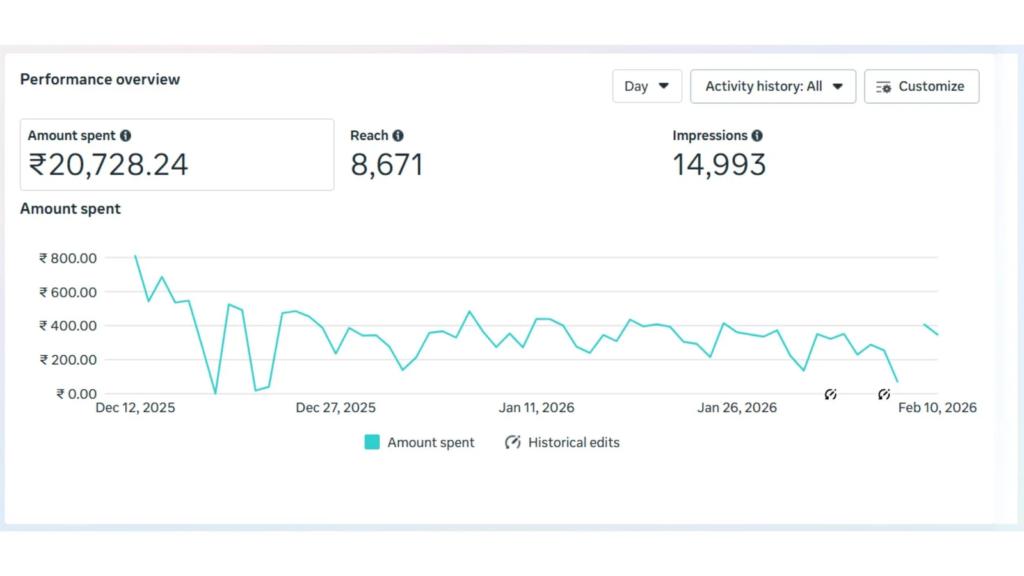
They weren’t spending more money. They were just spending it smarter because they finally understood what was actually working.
Building an Attribution System for Your Real Estate Agency (You Don’t Need To Be Technical)
You don’t need an engineering team to set this up. Here’s what you need:
1. A unified CRM (HubSpot, Pipedrive, or similar): Every lead goes into one place. Every interaction is logged.
2. UTM parameters on every link: A simple text addition to your URLs that tells you exactly where a click came from. Example: www.yoursite.com/?utm_source=facebook&utm_medium=paid&utm_campaign=summer_listings
3. Event tracking on your website: When someone fills out a form, you log it. When they download a PDF, you log it. This is usually a few lines of code or a tool like Google Tag Manager.
4. Conversion tracking in your ad platforms: Facebook needs to know when a lead becomes a consultation. Google needs to know the same.
5. A dashboard: (Google Sheets, Supermetrics, or a proper analytics tool) Pull all the data together into one place where you can actually see what’s working.
This isn’t complicated. This is foundational marketing hygiene that most agencies skip. And it’s costing them money every single month.
The alternative is to work with an agency that does this already. We’ve built these fractional CMO systems for real estate companies, and it typically takes 4-6 weeks to get full attribution working. But it pays for itself in the first month through optimization alone.
The Channels That Matter for Real Estate (And How They Work Together)
For a real estate agency, your attribution system should be tracking these channels specifically:
Google Search Ads: High-intent (someone is actively searching for homes). Usually mid-to-late funnel.
Facebook/Instagram Ads: Broad awareness. Excellent for retargeting people who have visited your site. Good for the early funnel.
Email Campaigns: Nurturing and new listing notifications. Works best on people already in your database.
Retargeting Campaigns: Bringing back people who visited your site but didn’t convert. Improves later touchpoints.
Organic Social Media: Building trust and showcasing listings. Lower ROI per post, but creates brand familiarity.
Your Website & SEO: Organic search traffic. Often underfunded because it’s not a paid channel, but it can drive consistent leads.
Each channel has a different job. Google finds people actively looking. Facebook builds familiarity. Email keeps you top-of-mind. Without attribution, you can’t see that they’re all necessary parts of the same machine.
The Bottom Line: Stop Guessing, Start Measuring
Every dollar you spend on marketing without proper attribution is a dollar you’re spending based on incomplete information.
You’re either over-investing in channels that look good but don’t drive sales, or under-investing in channels that quietly work but don’t get credit.
Multi-touch attribution solves this. It shows you exactly which channels are actually driving deals and which ones you can afford to cut.
For real estate agencies specifically, this usually means:
- 20-30% improvement in lead quality (because you’re nurturing properly)
- 15-25% improvement in marketing ROI (because you’re allocating to the right channels)
- 40%+ reduction in wasted ad spend (because you can see what’s not working)
This isn’t theoretical. Centasource did it. They now have a repeatable system for generating qualified international buyers, and every dollar they spend is tied to actual results.
If you’re ready to stop guessing and start measuring, we can help. We’ve built these demand generation systems for dozens of real estate agencies, and they all say the same thing: “Why didn’t we do this sooner?”
Let’s talk about your current setup and where the gaps are, or get to know us better here.
Want to dive deeper?
- How marketing automation connects your channels
- Building high-converting sales funnels for real estate
- Retargeting strategies that actually work
- The complete guide to demand generation
- How social media management amplifies your other channels
- Real-time inventory syncing for multi-channel sellers (Same principle, different industry)
– Blog written by Sarah Joshi