On a typical Tuesday at a mid-sized salon, three clients do not show up. Each had a service worth $80 booked. That is $240 gone from that afternoon. Stylists sit idle. Staff set up stations for nothing. Time cannot be recovered or resold.
Over a week, this pattern produces $500 or more in lost revenue. Over a year, the same salon is looking at $25,000 or more in appointments clients booked, blocked, prepared for, and then simply never attended.
According to Etisia’s 2026 no-show statistics report, hair salons average a 15% no-show rate. Furthermore, Vocaly AI’s salon scheduling research puts the range at 15 to 30% for salons without automated reminder systems. For a salon with 200 monthly appointments at an average service value of $85, that represents between $2,550 and $5,100 in lost revenue every single month.
Appointment reminder automation is the most direct intervention available. It does not eliminate no-shows, but it consistently reduces them to under 5%. Here is what the data shows, how the system works, and what a properly built reminder sequence looks like for a salon.
What No-Shows Are Actually Costing the Business
The direct revenue loss is significant, but it is not the only cost. No-shows create a compounding operational problem that affects the entire business.
BookrHub’s 2026 no-show report puts the average salon loss at $1,500 to $3,000 per month from missed appointments. High-end salons lose $5,000 or more monthly. Over a year, that represents $18,000 to $60,000 in uncaptured revenue. For many small salon businesses, that range is the difference between profitability and breaking even.
Beyond the revenue, four additional costs rarely get measured.
Wasted staff time. According to Etisia’s analysis, three to four no-shows per week produce 150 to 200 wasted hours annually. That is the equivalent of four to five full working weeks of a stylist’s time sitting idle because a client did not appear. Furthermore, staff who experience repeated no-shows become demoralised over time, contributing to turnover.
Lost waitlist revenue. Every no-show blocks a slot that could have been filled by a client on the waitlist. The salon loses not just the original appointment but the opportunity to serve another paying client in that same window.
Inventory and product waste. Staff set up stations and prepare products for appointments that never materialise. In salons using professional product stock for colour or treatment services, no-shows create direct material waste alongside the revenue loss.
Reputation damage from scheduling inconsistency. Clients on waitlists who repeatedly fail to get last-minute openings because the salon did not catch no-shows early enough lose faith in the salon’s ability to manage availability professionally.
Why Most No-Shows Are Preventable
The critical insight from the data is that most no-shows are not intentional. Clients do not decide to skip their appointments. Forgetting is the most common cause. Confusion about the time or date is another. Sometimes something unexpected comes up, and the client does not realise they need to cancel rather than simply not appear.
Vocaly AI’s research cites a Cochrane systematic review of eight randomised controlled trials that found SMS reminders improved appointment attendance rates by 14%. The improvement came not from clients becoming more committed to their appointments but from clients being reminded at the right moment to either confirm they were coming or reschedule if they could not.
This is the key operational insight. Reminder automation does not change client behaviour by persuasion. It simply removes the forgetting problem, which is responsible for the majority of no-shows. A client who forgot they had an appointment at 2 pm on Wednesday will likely make that appointment if a text arrives on Tuesday morning reminding them.
Moreover, a client who cannot make it is far more likely to cancel with enough notice to fill the slot when the reminder makes cancellation easy.
What Appointment Reminder Automation Actually Does
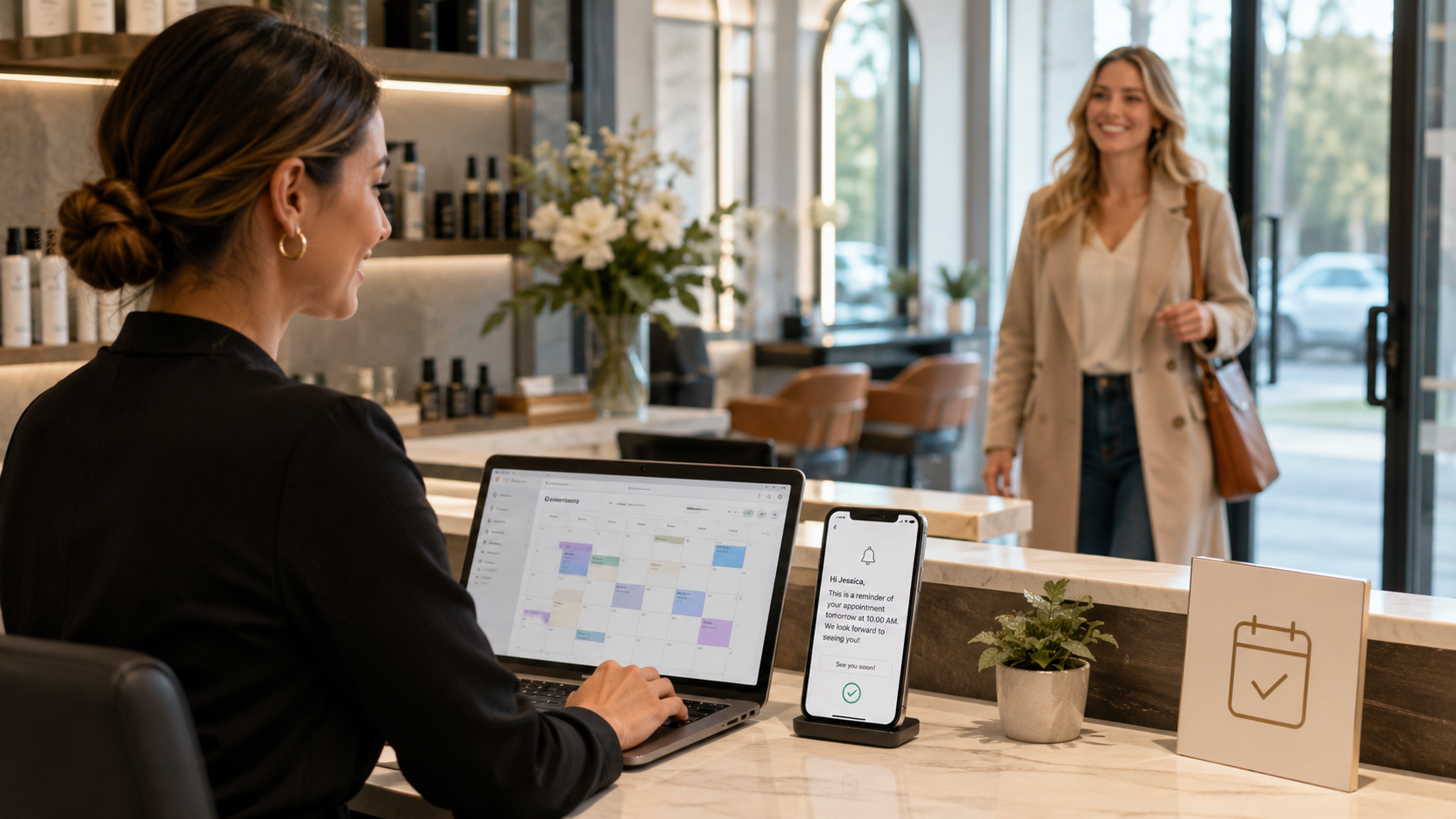
An automated appointment reminder system sends pre-scheduled messages to clients at defined intervals before their appointment. The system connects to the salon’s booking software and triggers messages automatically without any staff member initiating contact.
A well-built salon reminder sequence typically involves three touchpoints.
Booking confirmation (immediate). The moment an appointment is booked, a confirmation message goes out with the date, time, service, stylist name, and salon address. This serves as the client’s written record and reduces confusion about appointment details.
48-hour reminder. A message sent two days before the appointment gives clients enough time to reschedule if they have a conflict, without leaving it so late that the slot cannot be filled. This reminder includes a direct cancellation or rescheduling link so the action is immediate and frictionless. Additionally, it reminds clients of any pre-appointment instructions, such as arriving with dry hair or avoiding certain products.
Day-of confirmation. A message sent two to four hours before the appointment asks the client to confirm they are still coming or to contact the salon if they need to reschedule. This is the most powerful single touchpoint in the sequence. Zenoti’s 2025 Benchmark Report confirms that salons with automated reminder systems, including a same-day confirmation step, reduce no-shows by 25 to 40%.
Our marketing automation service at Trigacy builds these reminder sequences for service businesses, connecting the trigger to the booking system so every appointment generates automatic reminders without any manual scheduling by the front desk team.
The Channels That Work Best for Salon Reminders
SMS outperforms all other reminder channels for salons. Open rates on SMS messages run above 90%, and most are read within three minutes of receipt. An appointment reminder that arrives by SMS on the morning of the appointment reaches the client at a moment when their phone is already in their hand.
Email reminders add a useful secondary layer. Email is better suited to the 48-hour reminder because it provides enough space to include rescheduling links, pre-appointment instructions, and the salon’s cancellation policy. However, email alone as the sole reminder channel produces significantly lower results than SMS alone.
WhatsApp is increasingly effective in markets where it is the primary communication platform, particularly for salons serving international clientele or operating in regions where WhatsApp is the default messaging app. A WhatsApp reminder feels more personal than SMS and allows two-way conversation if the client needs to reschedule.
According to Zenoti’s 2026 salon and spa booking trends report, 55% of salon clients already accept AI-assisted booking communication. Middle-aged clients aged 30 to 60 are leading adoption, which challenges the assumption that automation will alienate older or less tech-savvy clients. Most clients simply want clear, timely communication, regardless of whether it comes from a human or a system.
What Most Salons Get Wrong
Sending only one reminder. A single reminder sent 24 hours before the appointment recovers some no-shows but leaves significant prevention on the table. The three-touchpoint sequence described above outperforms single-reminder systems because it addresses forgetting at booking confirmation, provides enough notice for rescheduling, and catches same-day cancellations before the slot becomes unrecoverable.
No easy cancellation path in the reminder. A reminder that tells the client they have an appointment but does not include a simple way to cancel or reschedule if they cannot come produces lower response rates and more silent no-shows. Every reminder should include a one-tap cancellation or reschedule link. Making cancellation easy is not an invitation to cancel. It is an invitation to give the salon enough notice to fill the slot.
Not connecting reminders to a waitlist system. Appointment reminder automation only delivers its full value when it connects to a waitlist that automatically fills cancelled slots. A cancellation coming 48 hours in advance creates an opportunity. The salon can immediately offer that slot to a client on the waitlist. Without this connection, early cancellations leave recoverable revenue on the table.
Sending reminders at the wrong time. A reminder sent at 11 pm produces far lower confirmation rates than one sent at 8 am or 10 am. Clients are unlikely to engage with a booking reminder late at night, and the psychological window for acting on it (confirming, rescheduling, or cancelling) closes until the next morning, by which time many have forgotten again. Timing matters as much as channel and content.
No follow-up for unconfirmed appointments. When a client does not respond to the 48-hour reminder, they are a higher no-show risk than one who confirmed. An additional brief follow-up specifically to unconfirmed bookings in the 24-hour window recovers a meaningful percentage of this higher-risk group. Without this logic, the reminder system treats all clients identically regardless of their response behaviour.
No-shows and missed follow-ups share the same root cause. Here is why ownership of the follow-up process is what separates salons that recover revenue from those that keep losing it.
How Automated Follow-Up Systems Ensured Booked Consultations Were Actually Attended
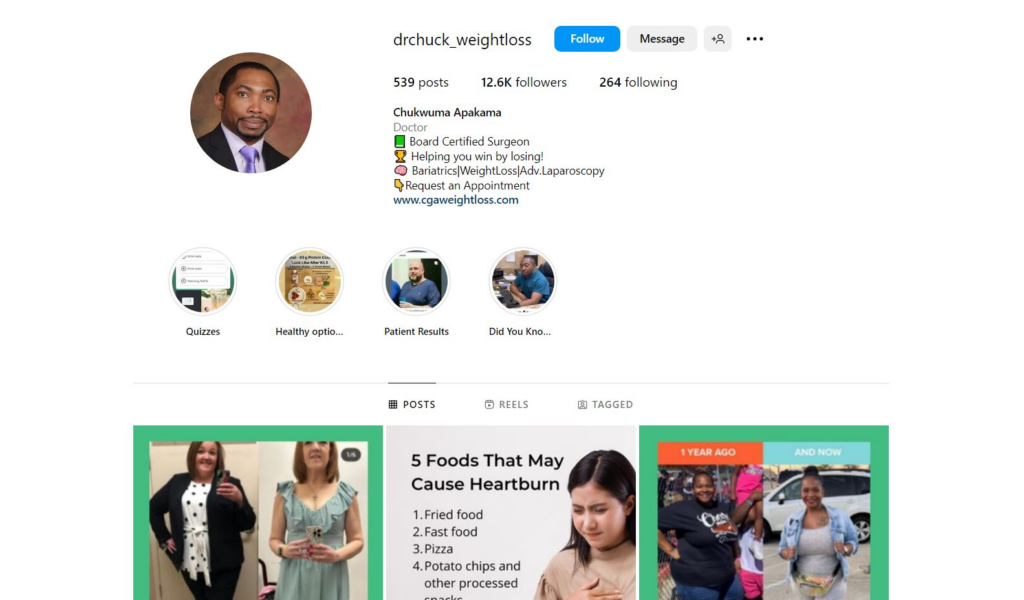
CGA Weight Loss operates in a healthcare category where the gap between a lead booking a consultation and actually attending it represents significant revenue risk. The consultation is the critical conversion step. A lead who books and does not attend is effectively a no-show that costs the practice the acquisition spend used to generate that enquiry.
The automated system we built for CGA included not just lead generation but appointment confirmation and follow-up sequences that kept booked consultations on track. Confirmation messages went out immediately on booking. Reminder sequences followed in the days before each consultation.
Every reminder included rescheduling options so clients who needed to change their appointment could do so while preserving the slot for the practice rather than creating a silent no-show.
The result was 25 or more qualified leads per month converting to attended consultations at a consistently high rate. The reminder and confirmation infrastructure was the component that protected the conversion between booking and attendance.
For a salon, the same infrastructure works identically. A booking is the commitment. Reminder automation is what converts that commitment into an attended appointment.
Book a call with our team to discuss how appointment reminder automation would work for your specific salon.
The Bottom Line
No-shows are not a client loyalty problem. Most clients who miss appointments simply never received a timely reminder. Automated appointment reminder systems solve this at the root.
A salon operating at a 15% no-show rate and reducing it to 5% through automation recovers approximately two-thirds of its no-show revenue loss. For a salon losing $2,000 per month to missed appointments, that is $1,300 in additional monthly revenue from the same booking volume, with no increase in ad spend or new client acquisition.
Furthermore, the operational benefits compound. Stylists spend less time idle. Waitlisted clients get slots that would have been empty. Cancellations come with enough notice to fill the gap. The entire appointment schedule becomes more predictable and more profitable.
That is the system we help salons and service businesses build through our marketing automation service, social media management, retargeting campaigns, sales funnels, and full-funnel demand generation programs.
Let us build it for your salon.
– Blog written by Sarah Joshi