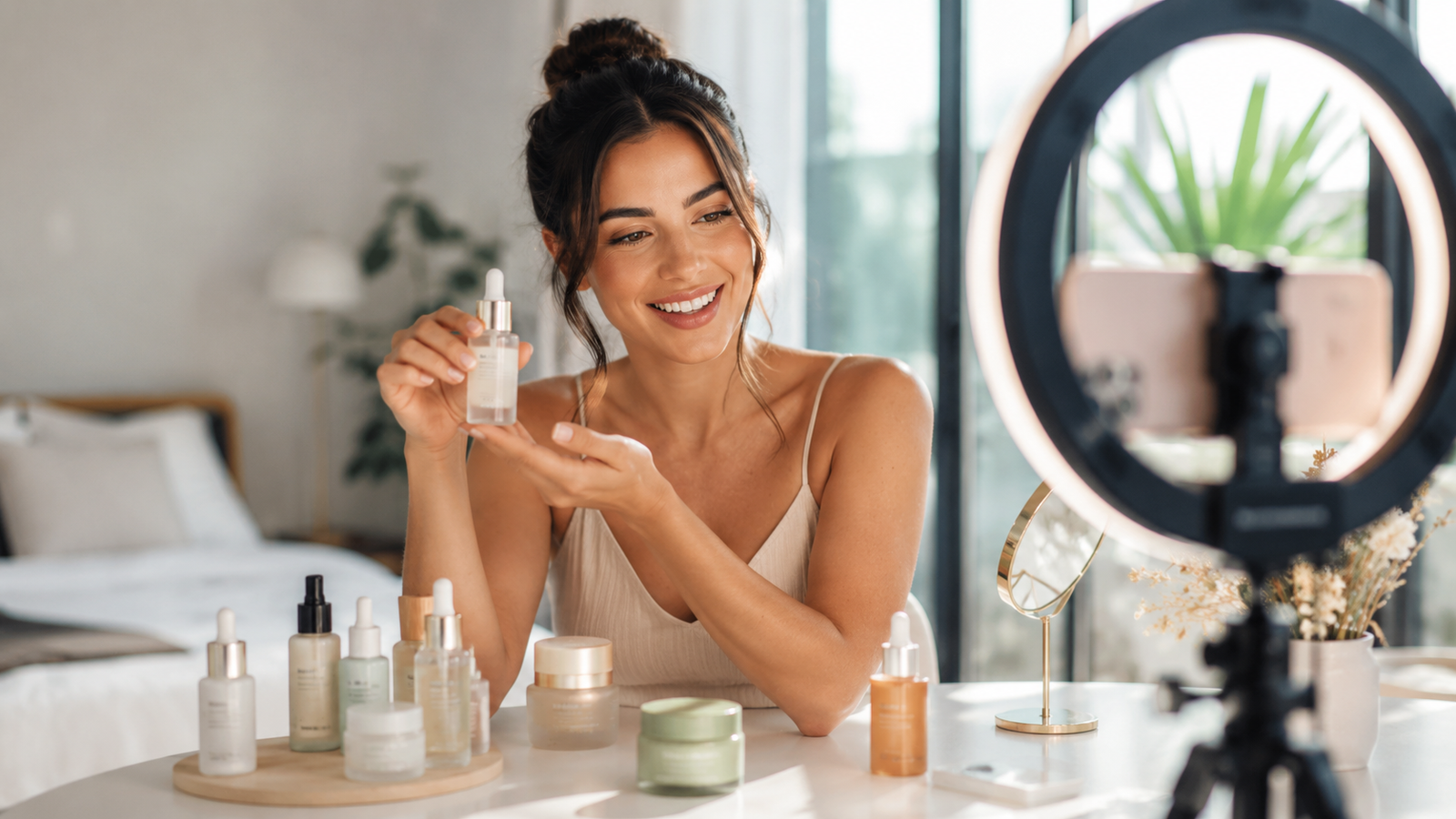
Someone on TikTok held up a $28 serum, said “this cleared my skin in two weeks,” and it sold out in 48 hours.
No professional lighting, no script, and no celebrity. Just a real person, a real result, and a phone camera.
That moment tells you everything you need to know about where beauty marketing is right now. The brands winning on paid social are not the ones with the biggest production budgets. They are the ones that figured out how to bottle the energy of a genuine customer review and turn it into an ad that feels nothing like an ad.
That is what UGC advertising is. And for beauty and skincare brands, it has become the single most cost-effective creative format available.
Here is why it works, what most brands get wrong, and how to build a system around it that actually scales.
The Trust Gap That Traditional Beauty Ads Created
Beauty advertising has a credibility problem.
Decades of airbrushed models, filtered before-and-afters, and claims that have not stood up to scrutiny have made consumers deeply skeptical of polished beauty content. They have seen enough “clinically proven” campaigns to know that phrase means almost nothing. They have watched enough celebrity brand launches to understand that a famous face does not mean a good product.
So when a brand runs a perfectly lit, professionally edited ad with a model who clearly has a full makeup team behind her, the audience switches off. Not because the ad is bad. But it does not feel real.
Trust, in the beauty and skincare category, now lives with real people. Dermatologists on TikTok. Micro-influencers with honest reviews. Customers who post before-and-after photos without being asked. That is where purchasing decisions are being made.
According to research compiled by Marketing LTB, 93% of consumers say user-generated content is very helpful when making a purchasing decision. Furthermore, ads built on UGC deliver 4x higher click-through rates and 50% lower cost per click compared to non-UGC ads.
Those are not incremental improvements. Those are category-level differences. And they explain why smart beauty brands are systematically shifting budget toward UGC-led creative.
What UGC Ads Actually Are (and What They Are Not)
Before going further, it helps to be specific about what UGC ads actually mean in a paid advertising context. Because there is a lot of confusion here.
UGC ads are not the same as influencer marketing. An influencer campaign involves paying someone with a large following to post content to their audience. The goal is to reach. UGC is different. The goal is authenticity.
A UGC ad is content created by a real person (a customer, a micro-creator, or a UGC-specific content creator) that looks and feels like organic content, then gets used as paid ad creative. The key characteristic is that it does not look like a brand made it.
No studio lighting, polished voiceover, or branded template. Just someone talking genuinely about a product, showing it on their skin, and telling you what it did for them.
This format works because it fits the native environment of the platforms where beauty brands advertise. On Instagram Reels and TikTok, a professionally produced ad looks out of place. A real person holding a product and talking directly to the camera looks exactly like everything else in the feed. People watch it. They engage. They click.
In short, UGC ads earn attention in a way that polished creative simply cannot.
The Numbers Behind the Format
The data on UGC in the beauty and skincare category is compelling in every direction.
A survey by PoweredXBeautyBuddy found that 97% of respondents have purchased a beauty, skincare, or wellness product after seeing it on social media. Of those, product reviews and demonstrations were the most influential type of content at 86%, with user-generated content specifically cited by 45% of respondents as a key influencing factor.
Moreover, according to inBeat Agency’s UGC research, brands using UGC see 29% higher web conversions than those without it. UGC posts also generate 28% higher engagement than standard brand content on social platforms.
On the advertising side, the performance gap is even more pronounced. In an analysis of 500 top-performing beauty ads by Evolut Agency, brands like Topicals and Youthforia consistently outperformed competitors by pairing UGC-heavy, demo-first ad creative with tight, conversion-optimized landing pages. Over 61% of their top ads led directly to product pages, removing every possible barrier between the ad and the purchase.
The pattern is clear. UGC-led creative, paired with a smart funnel, is consistently outperforming polished brand content in the beauty category. The brands that understand this and build systems around it are pulling ahead.
Why Polished Ads Are Losing Ground in Beauty
There is a reason the traditional beauty ad format is struggling. It is not just about aesthetics. It is about the psychology of the purchase decision.
Buying a skincare product involves a specific kind of trust. You are putting something on your face, investing money in a result that may or may not happen, hoping the product works the way the brand says it will.
In that context, a real person showing you their actual skin, talking through their experience, and answering the objection of “but will it work for me?” does something no brand-produced ad can replicate. It reduces perceived risk. It makes the purchase feel safer.
Furthermore, the platforms themselves are rewarding native-looking content. TikTok’s algorithm favors content that holds attention. Instagram Reels performs better when it does not feel overtly promotional. YouTube shows that 86% of top-performing beauty videos come from creators rather than brand accounts. The platforms are literally amplifying authentic content over polished brand content.
Running expensive studio creatives on these platforms is therefore working against you on two levels. The audience is skeptical of it. The algorithm deprioritizes it. UGC solves both problems at once.
What Makes a UGC Ad Actually Work
Not all UGC is created equal. Plenty of beauty brands try UGC, get mediocre results, and conclude the format does not work for them. In almost every case, the problem is not the format. It is the execution.
Here is what separates high-converting UGC beauty ads from content that goes nowhere.
A hook that stops the scroll in the first two seconds. The first frame of a UGC ad is everything. “I tried every serum for my dark spots, and nothing worked until this.” is a hook. “Introducing our new vitamin C serum” is not. The hook needs to create immediate identification — the viewer should see themselves in the problem being described.
Specific, visible results. Vague language kills conversion. “My skin looks so much better” is forgettable. “My hyperpigmentation was noticeably lighter in ten days” is believable and compelling. Specificity is credibility. Before-and-after content, when done honestly and clearly, remains one of the highest-converting formats in beauty advertising.
Natural, unscripted delivery. The moment a UGC video starts to sound like it was read from a brief, it loses its power. The best UGC creators speak the way they would to a friend. They pause, they qualify their statements, they share what they actually noticed. That imperfection is the point.
Social proof layered in. The most effective UGC ads do not rely on a single voice. They reference other people’s experiences. “I saw so many people talking about this,” or “my dermatologist actually recommended it” adds a second layer of trust on top of the creator’s personal experience.
A clear, low-friction CTA. UGC ads work best when they end with a simple, direct call to action that feels like a friend giving advice. “Honestly, just try it, the link is below” converts better than “Shop now and use code X for 15% off.” The latter feels like an ad. The former feels like a recommendation.
How to Collect and Scale UGC for Paid Ads
This is where most beauty brands stall. They understand why UGC works. They just do not have a reliable system for producing enough of it to run ongoing campaigns.
There are three practical approaches.
Customer-generated content. Actively encourage your existing customers to share their experiences. Feature real reviews on your product pages. Run hashtag campaigns that incentivize sharing. Email customers 2 to 3 weeks post-purchase and ask for a photo or video review. This approach produces the most authentic content because it comes from genuine buyers with no creative brief attached.
Micro-creator partnerships. Work with creators who have 5,000 to 50,000 followers in the beauty and skincare niche. These creators typically charge significantly less than macro-influencers, produce highly authentic content, and often have deeper engagement with their specific communities. The brief is simple: use the product genuinely and share what you actually experience. You are paying for raw creative rights, not a sponsored post.
Dedicated UGC creators. A growing category of creators produces UGC content specifically for brands to use as ad creative, without posting it to their own channels. They are trained to produce content that looks organic but is built around a creative strategy. This is the most scalable approach because you can commission multiple angles, hooks, and formats simultaneously without depending on what customers happen to post organically.
Our social media advertising packages and AI content creation service are built to help beauty brands manage exactly this production challenge. We help identify the right creators, brief them correctly, and turn the resulting content into high-performing paid ad creative.
Platforms and Formats That Work Best for Beauty UGC Ads
Different platforms reward different UGC formats. Understanding where to put your creative is as important as the creative itself.
Meta (Facebook and Instagram) remains the primary paid channel for beauty and skincare brands. Instagram Reels and Stories work best with short-form UGC video (15 to 45 seconds). The targeting capabilities on Meta — by age, interest, behavior, and lookalike audience — make it the most efficient platform for reaching your exact customer profile. Our social media advertising team runs Meta campaigns specifically optimized for beauty and skincare conversion.
TikTok has become impossible to ignore for beauty brands, particularly those targeting Gen Z and younger millennials. According to beauty marketing data from 2026, TikTok Shop processed over $3.4 billion in beauty transactions in Q1 2026 alone, a 41% year-over-year increase. TikTok UGC is also estimated to be 22% more effective than standard brand content on the platform. For beauty brands not yet running UGC ads on TikTok, this is the most significant missed opportunity right now.
Instagram Reels bridges the gap between Meta’s targeting power and TikTok’s native content culture. UGC Reels that perform well organically can be amplified as paid ads without losing their native feel. This is one of the most efficient uses of UGC creative in the beauty category.
YouTube pre-roll works well for longer-form UGC content such as skincare routine walkthroughs, ingredient explainers, or extended before-and-after stories. These are typically 60 to 90 seconds and work best as mid-funnel content targeting people who have already interacted with your brand.
Retargeting campaigns across these platforms ensure that people who have seen your UGC ads but have not converted get served follow-up creative. A viewer who watched 80% of your Reels ad is a warm lead. Serving them a customer testimonial or a limited-time offer as a second touchpoint dramatically increases the probability of conversion.
What Most Beauty Brands Get Wrong with UGC
We work with beauty and wellness brands through our social media marketing services and have seen the same mistakes repeatedly.
Too much brand control over the creative. When brands over-brief UGC creators — scripting every line, demanding specific brand language, requiring multiple approval rounds — the result is content that looks like UGC but feels like a polished ad. The audience can tell. The algorithm can tell. Let creators speak in their own voice.
Using UGC only for organic, not paid. Many beauty brands collect great customer content and post it organically. Then they run completely separate, polished creative for their paid ads. This is a missed opportunity. The same content that resonates organically will typically outperform studio creative in a paid context. Put a budget behind what is already working.
Not testing enough creative variations. A single UGC video is not a strategy. High-performing beauty advertisers are testing 5 to 10 UGC variations per product simultaneously.
Different hooks, different creators, and different skin tones and skin concerns.
The winning creative emerges from testing, not from intuition.
No funnel below the ad. A UGC ad that drives someone to a generic homepage loses most of its effectiveness at the click. The landing page needs to continue the story that the ad started. If the ad features a creator talking about dark spots, the landing page should lead with dark spot results, reviews from customers with similar concerns, and a clear path to purchase. Our sales funnel buildouts are designed to close this gap for beauty and skincare brands.
Stopping when results plateau. UGC creative has a shelf life. What converts brilliantly for the first four to six weeks will start to fatigue as audiences see it repeatedly. Successful beauty brands treat UGC as a continuous production pipeline, not a one-time content exercise.
What This Looks Like for a Beauty Brand in Practice
Say you run a direct-to-consumer skincare brand with two or three hero products. You are spending on Meta ads, but your cost per purchase is higher than you would like. Your current creative is a mix of polished product photography and professionally shot video. Results are inconsistent.
Here is what a UGC-led creative strategy looks like for you over 90 days.
Month one: We identify five to eight micro-creators in the skincare space who match your target customer profile. We brief them with a loose framework (the concern to address, the result to highlight, the CTA) but give them full creative freedom in execution. Each creator produces two to three pieces of content. You now have 12 to 24 UGC assets to test.
Month two: We launch these assets across Meta as paid ads, testing different hooks, different creators, and different formats (Reels, Stories, carousel). Simultaneously, retargeting campaigns serve follow-up creative to people who engaged but did not convert. Within the first three to four weeks, two to three clear winners emerge. We scale the budget behind those.
Month three: Cost per purchase drops. The winning creative is producing results at a lower cost than your previous polished ads. We commission a second round of UGC from new creators based on what we learned, and the cycle repeats.
This is the compounding effect of a UGC system. Each round of testing makes the next round more effective because you are optimizing based on real performance data, not guesswork.
If you want to see how we would approach this for your specific brand, book a consultation with our team or get to know more about us here. We map out your current creative gaps, identify the right creator profiles for your audience, and build a content and paid media strategy from there.
The Bottom Line for Beauty and Skincare Brands
The beauty industry is not going back to polished brand advertising as its primary conversion engine. That ship has sailed.
The brands that will own their categories over the next three to five years are the ones building systems around authentic content. Real customers, real results, and real conversations. Turned into paid ads that feel like word of mouth at scale.
In addition, this is not just a creative preference. The data backs it up at every level. Higher click-through rates. Lower cost per click. Higher web conversions. Better algorithm performance. The case for UGC is not a trend argument. It is a numbers argument.
The question is not whether to invest in UGC. It is whether you are doing it systematically enough to matter.
That is where we come in. Our social media management packages, paid advertising services, retargeting campaigns, and full-funnel demand generation programs are all built to work together toward one outcome: a beauty brand that converts consistently and compounds over time.
Let us talk about what that looks like for your brand.
– Blog written by Sarah Joshi