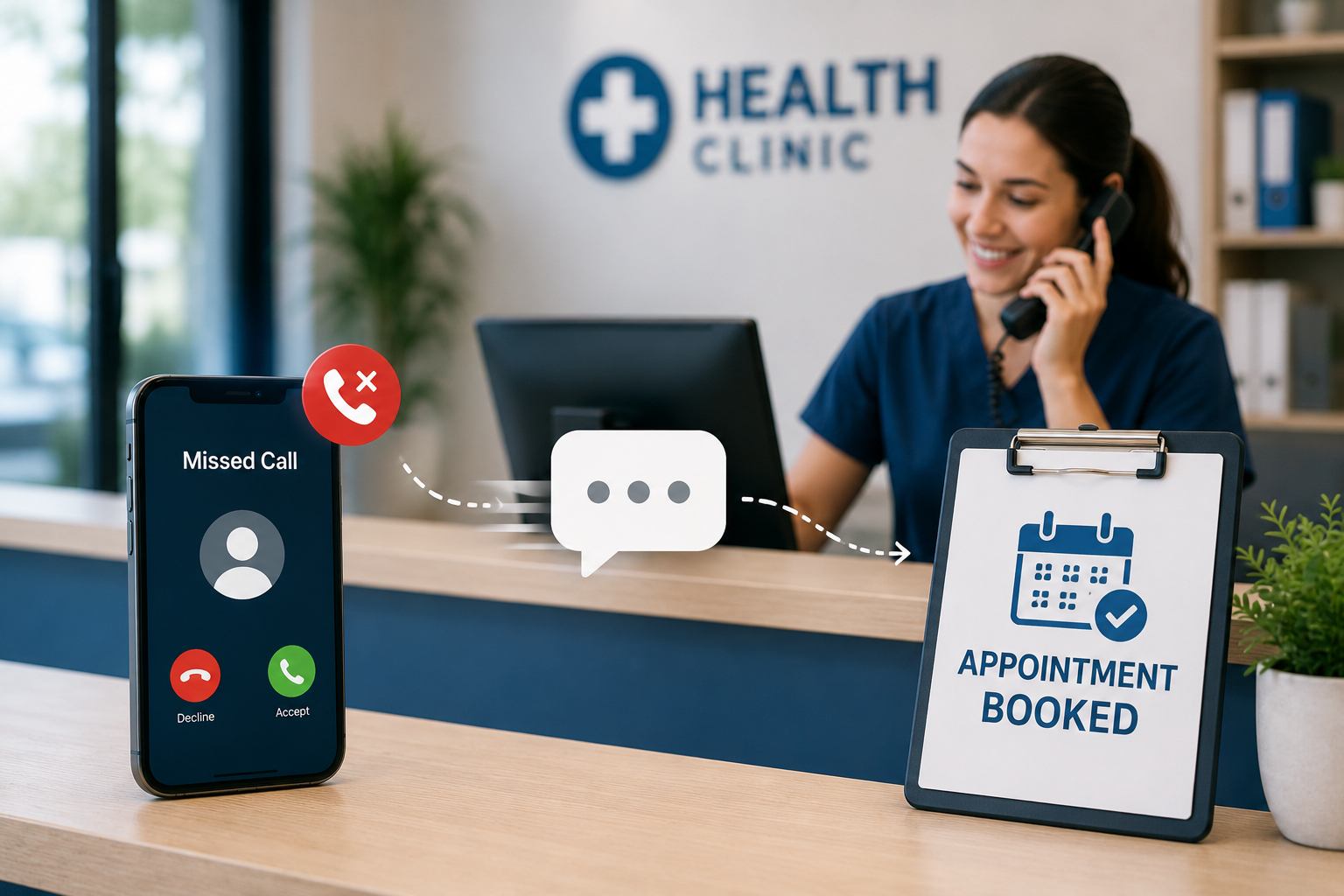
It is 8:47 am at a dental clinic. Two lines are ringing. The front desk is managing a patient check-in and answering a third call about a billing question. Both ringing lines go to voicemail. Within 90 seconds, both callers had hung up and Googled the next dental clinic on the list. Neither will call back.
This happens every day at clinics across every specialty. Staff is not negligent. Clinic management is not the problem. There is simply more incoming call volume than the front desk can handle simultaneously, particularly during peak windows.
The revenue loss is larger than most clinic owners realise. According to Neuwark’s 2026 analysis of medical practice call data, the average medical practice misses 34% of incoming calls. Each missed call costs between $125 and $200 in direct lost revenue.
A five-physician practice missing five new patient calls per day loses approximately $144,000 annually. For specialist clinics with higher patient lifetime values, the figure compounds significantly further.
Automated missed call text-backs address this directly. The moment a call goes unanswered, the system fires an instant SMS to the caller. The patient is engaged within seconds. The appointment revenue that would have walked out the door stays in the pipeline. Here is how the system works and why it consistently outperforms voicemail as a recovery mechanism.
Why Voicemail Fails Clinic Patients
The voicemail assumption has been obsolete for years. Clinics that still depend on it as a fallback are losing more patients than they know.
According to Aira’s 2026 missed call statistics, 80% of callers who reach voicemail hang up without leaving a message. Furthermore, 85% of callers who do leave a voicemail never call back. They move on immediately.
The behaviour is particularly pronounced in healthcare. RingEden’s 2025 research found that 78% of customers choose the first business that responds to them. For a patient with a dental emergency, a sore throat, or a skin concern, waiting for a voicemail callback is not an option they are willing to take. The next clinic is one tap away on Google.
Neuwark’s analysis puts the competitor switching rate at 41%. More than four in ten patients who cannot reach a clinic immediately contact an alternative provider. That is not a minor attrition figure. For a busy clinic, that number represents a consistent, compounding drain on new patient acquisition.
What Automated Missed Call Text-Back Actually Does
When a call goes unanswered, the system detects the missed call and sends an SMS to the caller’s number within seconds. The message is personalised to the clinic and can include the clinic name, a brief acknowledgement of the missed call, a direct booking link, and a prompt for the patient to reply with their preferred callback time.
The patient receives a response before they have even had time to search for an alternative. Furthermore, the text format removes the friction of having to call back and wait on hold. A single tap on the booking link takes them directly to the appointment scheduler.
According to Dialzara’s 2025 missed call research, businesses with round-the-clock automated coverage capture 15 to 20% more appointments outside normal business hours. For clinics, this matters particularly because Neuwark’s Curogram data shows that 11% of patient calls occur outside business hours. These callers have zero chance of reaching a live person.
An automated text-back captures them when nothing else can.
The Revenue Math Every Clinic Should Run
The financial case for missed call text-back is not complicated. The numbers are straightforward.
Take a general practice clinic receiving 60 calls per day. At the 34% missed call rate cited by MGMA, that is approximately 20 missed calls daily. At $150 average per missed call in direct revenue, that is $3,000 per day. Over 240 working days, that is $720,000 in annual lost revenue from missed calls alone.
Not every one of those callers will convert via text-back. However, Patient10x’s 2025 analysis found that clinics implementing automated response solutions typically recover 60 to 80% of previously lost revenue within the first year. Even recovering 30% of that missed revenue produces a meaningful return against the cost of the system.
The calculation also excludes lifetime patient value. A new patient who books through an automated text-back and becomes a regular visitor is worth far more than the value of that single appointment. Neuwark’s analysis estimates primary care lifetime patient value at $3,000 to $5,000. Specialist practices run significantly higher.
Recovering even a handful of new patients per month through text-back compounds into substantial annual revenue.
How the System Works in Practice
Automation is only as good as the infrastructure behind it. Here is why having a partner who builds the system matters more than just using the tools.
A well-built missed call text-back system has three components that work in sequence.
Instant SMS response. The trigger fires immediately when a call goes unanswered. The message goes out within 30 seconds. Timing is critical here. According to research cited by Medium’s 2025 missed call analysis, a response within one minute produces a 391% increase in conversion compared to a delayed follow-up.
A text that arrives two hours later is orders of magnitude less effective than one that arrives in under a minute.
Two-way conversation capability. The patient can reply directly to the SMS. A reply initiates a simple conversation that captures their appointment preference, insurance details, or the nature of their visit. For many patients, completing the appointment booking entirely via text is faster and more convenient than a phone call.
Our marketing automation service at Trigacy builds these two-way conversation flows, connecting the SMS system to the clinic’s appointment scheduler so every text-back conversation can end with a confirmed booking.
Escalation to a staff callback. Some patients prefer to speak to a person. When a patient replies indicating this preference, the system flags the contact for a priority callback and routes it to the front desk queue.
The difference from a standard voicemail callback is that the patient has already engaged and confirmed interest. The staff member is calling a warm lead, not a cold voicemail number.
What Clinics Get Wrong When Implementing This
Sending a generic text. A message that reads “We missed your call. Please call us back.” recovers almost nothing. It adds no value over the voicemail the patient already ignored. The text needs to acknowledge the clinic specifically, offer an immediate path to booking, and feel like a human response rather than an automated placeholder.
Slow trigger timing. Every minute between the missed call and the text-back reduces recovery probability significantly. Systems that batch and send texts every 15 or 30 minutes miss the window entirely for patients who searched for alternatives within seconds of hanging up. The trigger must fire in under a minute.
No booking link in the text. Asking a patient to call back to book an appointment after they just tried calling and couldn’t get through is not a recovery strategy. It is a second barrier. Every missed call text-back should include a direct link to an online booking flow that takes the patient to a confirmed appointment without a phone call required.
Not tracking text-back conversion separately. Many clinics implement the system and then evaluate it only through overall new patient volume. This makes it impossible to identify what the text-back is specifically recovering.
Tracking replied texts, clicked booking links, and booked appointments that originated from a missed call text-back gives the clinic clear ROI data and reveals which call windows are generating the most missed opportunities.
Ignoring after-hours texts. A text-back sent at 9 pm should acknowledge that the clinic is currently closed and offer a clear path to booking first thing the following morning, ideally with a direct link. Sending a standard “We’ll call you back shortly” at 9 pm when the clinic is closed creates a poor patient experience.
How Automated Follow-Up Recovered Leads a Manual System Would Have Lost
CGA Weight Loss operates in a healthcare category where the patient journey involves significant consideration and where a slow response is often enough to lose the enquiry entirely. Potential patients researching weight loss procedures are typically contacting multiple providers simultaneously. The first to respond with relevant, helpful information wins the consultation.
The campaign we built for CGA combined targeted paid acquisition with an automated follow-up system that engaged every inbound enquiry immediately. No lead waited hours for a callback. Every contact received a personalised response within minutes, regardless of when they reached out.
The system also handled after-hours enquiries, flagging them for priority follow-up when the team was back online.
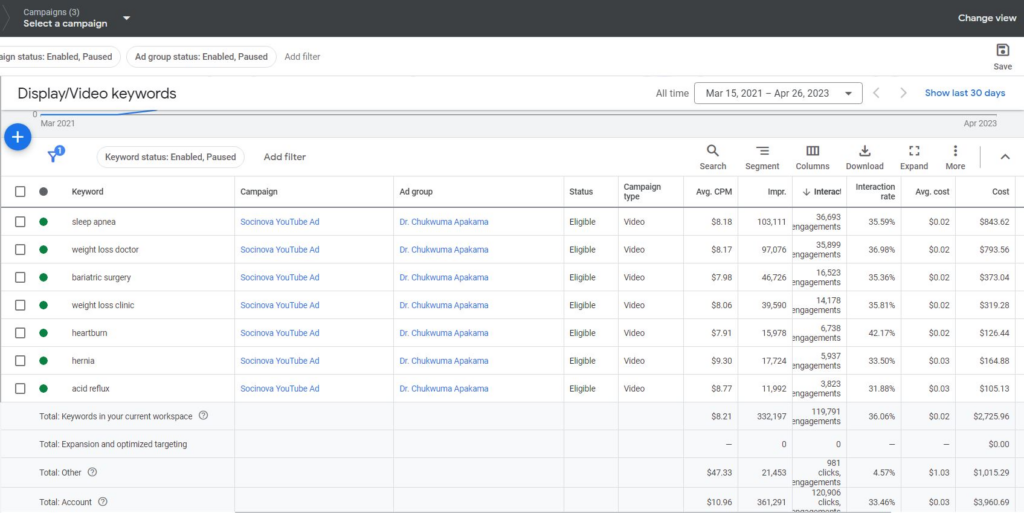
The result was 25 or more qualified leads per month at a consistently lower cost per acquisition. A meaningful portion of that performance came not from generating more traffic but from recovering leads faster. A slower manual system would have lost those leads to competitor practices that responded first.
The mechanism is identical to what a missed call text-back system does for a clinic. Faster first contact with inbound leads directly improves conversion rates. The channel differs. The principle is the same.
Book a call with our team to discuss how a missed call text-back system would work for your specific clinic or get to know us.
The Bottom Line
Most clinics focus their revenue recovery efforts on no-shows, cancellations, and billing. The missed call problem is larger than all three combined for many practices, and it goes almost entirely unmeasured.
The revenue does not appear in any report because it was never booked. That is what makes it so easy to overlook. However, the patients who called and did not get through have already made their decision. They booked with someone else.
Automated missed call text-backs recover that revenue before it leaves. The system fires before the patient has time to act on their second option. Patients get engaged in the channel they are already on. Every barrier between the missed call and a confirmed appointment disappears.
For any clinic generating meaningful call volume, this is one of the highest-return automation investments available. The setup is straightforward, the ROI calculation is clear, and the patient experience improvement is immediate.
That is the infrastructure we help clinics and healthcare practices build through our marketing automation service, sales funnels, retargeting campaigns, and healthcare marketing programs at Socinova.
Let us build it for your clinic.
– Blog written by Sarah Joshi