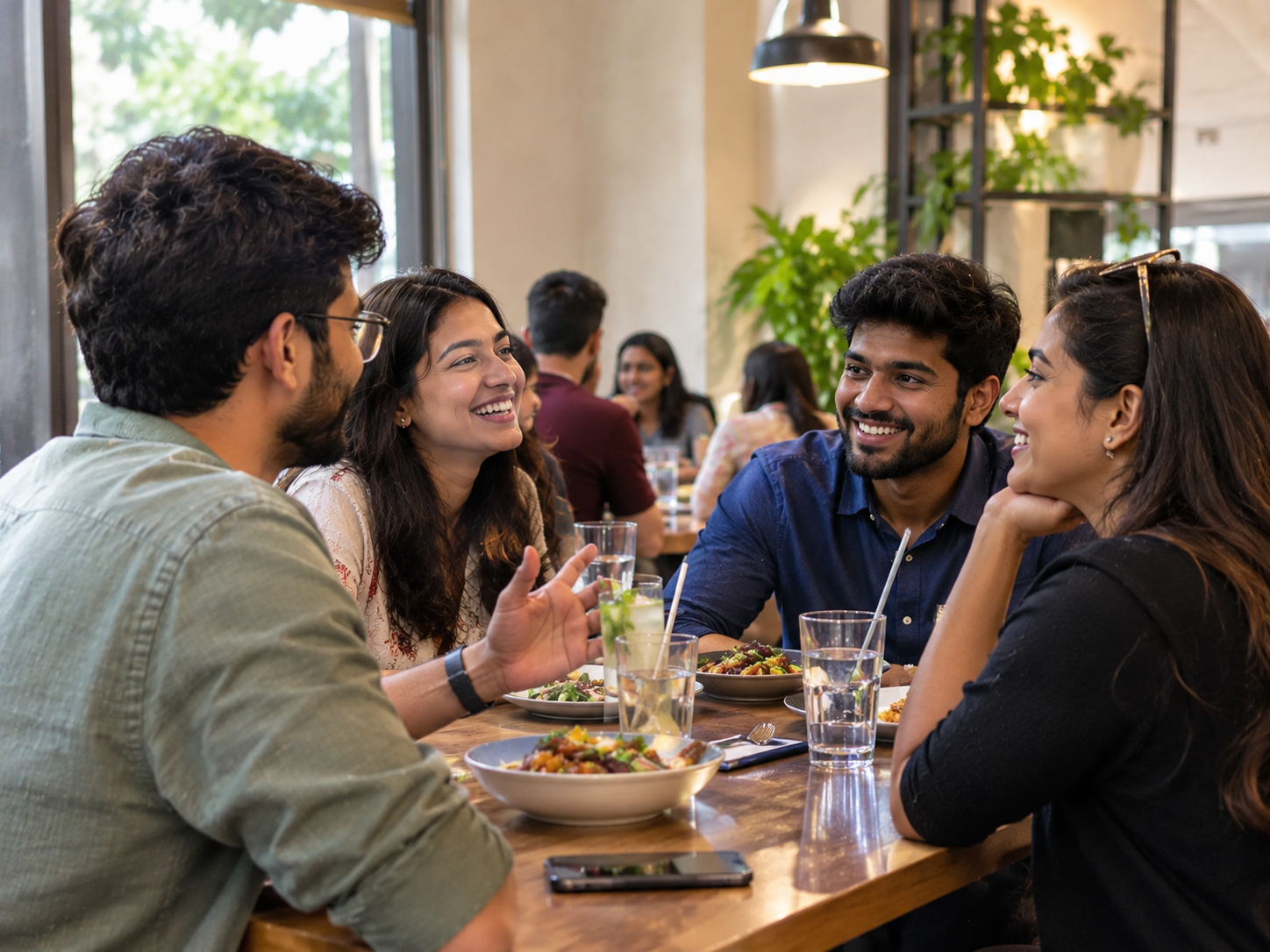
It is a Tuesday night, and your dining room is half empty. The kitchen is staffed, the lights are on, the rent is the same as it is on a packed Saturday. Yet the tables sit quiet, and every empty seat is money you will never get back.
Here is the frustrating part. The diners who would happily fill those tables are often sitting at home a few miles away, scrolling their phones. They have no idea your restaurant is the answer to the question they are about to ask: where should we eat tonight? They are not avoiding you. They simply do not know tonight is the night.
That gap is exactly what geo-targeted Facebook ads close. In short, they put a mouth-watering, time-sensitive offer in front of the people most likely to walk through your door. The targeting narrows to the few miles around your restaurant, and the timing lands on the nights you actually need to fill. Below, we will break down why weekday tables stay empty, what the data shows, and how to run ads that turn a slow Tuesday into a steady one.
What Geo-Targeted Facebook Ads Actually Mean for Restaurants
Local marketing is not about blasting one generic message to everyone. It is about tailoring who you reach and what you say to the market right around you. Here’s more on thinking local:
Geo-targeting is simply the practice of showing your ads only to people within a set distance of your restaurant, rather than wasting budget on anyone outside your realistic reach. Nobody drives 40 minutes for a midweek dinner, so there is no reason to pay to reach them.
Picture how this plays out for a neighborhood restaurant. You can draw a tight radius, say three to five miles, around your location. Within that radius, you can narrow further by age, interests, and behaviors, reaching the local families, young professionals, and food lovers most likely to book a table.
The real power shows up when you add timing and offers to the mix. A geo-targeted Facebook ad can promote a Tuesday taco night, a midweek happy hour, or a Wednesday family deal. Better still, it serves that offer on exactly the days you want those seats filled. You are not shouting into the void. You are inviting the right people, nearby, on the right night.
That combination of location, audience, and timing is what makes the difference. It turns a generic ad into a personal nudge that reaches someone who is hungry, close by, and deciding where to eat right now.
Why Weekday Tables Stay Empty, and How Local Targeting Fixes It
Weekends mostly take care of themselves. People go out on Friday and Saturday out of habit, so the tables fill with or without your help. Weekdays are a different story, because dining out midweek is a decision people need a reason to make.
That reason rarely reaches them on its own. Your regulars might remember you, but the hundreds of potential diners nearby have dozens of options and no prompt to choose you on a random Wednesday. Without a nudge, they default to cooking at home or ordering in.
Geo-targeted Facebook ads supply that nudge at the perfect moment. A well-timed ad showing your food, your atmosphere, and a reason to come in this week lands in the feeds of people close enough to act on it tonight. Suddenly, the quiet midweek evenings have a reliable source of new covers.
There is a discovery angle here too. A huge share of diners now find new restaurants on social media rather than search engines. The places filling their weekday tables are the ones actually showing up in local feeds. If your restaurant is invisible there, you are handing those midweek diners to the competitor who is not.
Supporting Data and Real-World Examples
The numbers behind this are hard to argue with.
Start with how diners actually choose where to eat. According to Toast’s restaurant social media research, 59% of diners use Facebook more than any other platform to discover new restaurants, and 90% check a restaurant’s social media before deciding to dine there. Among those diners, 57% say food photos influence their decision most. In other words, a strong local ad with great food photography is reaching people at the exact moment they are choosing.
The advertising economics back it up. Food service Meta ads benchmarks show restaurant lead campaigns converting at around 18% at a cost per lead near $3.16, with returns commonly landing between 2.5 and 4.5 times ad spend. Separate data cited in the same research found that targeted Instagram ad campaigns drove a 28% increase in reservations for restaurants. For a business where a single table can mean real revenue, those are numbers worth paying attention to.
A few patterns stand out across this data:
- Social is where discovery happens. Diners find their next meal in local feeds, not just on search, so that is where a restaurant has to show up
- The cost to reach nearby diners is low. At these lead costs, filling a handful of extra tables easily pays for the campaign
- Timing and photos do the heavy lifting. A tempting photo paired with a reason to come this week is what converts a scroll into a booking
The throughline is simple. Your future weekday diners are already nearby and already scrolling, and geo-targeted Facebook ads are how you reach them before someone else does.
How We Filled a Local Business’s Pipeline With Geo-Targeted Meta Ads
GoldMaids, a local service business, faced the same core problem every neighborhood restaurant knows well. Plenty of ideal customers lived right nearby, but not enough of them knew the business existed or had a reason to act now.
So we built them a geo-targeted Meta ads engine aimed squarely at their local market. Rather than casting a wide, wasteful net, we focused the budget on the people most likely to convert within their service area. We paired the ads with a clear offer and a frictionless path to book. The targeting did the filtering, and the offer did the convincing.
The results followed quickly. Inbound leads grew by 25% over six months, driven by reaching the right nearby customers with the right message. The business is cleaning rather than dining, but the lever is identical for a restaurant. You concentrate a smart offer on the people close enough to show up, and the quiet days start filling in.
How to Run Geo-Targeted Facebook Ads That Actually Fill Tables
Knowing geo-targeting works is easy. Running it so it reliably fills seats is where the craft comes in, and where most restaurants waste their budget.
Set a realistic radius, not a hopeful one. Target the area people will actually travel from for a weekday meal, usually three to five miles in a city and a bit wider in the suburbs. A radius that is too big burns money on diners who will never come, and a radius that is too small misses easy wins.
Lead with the food, not the logo. Diners decide with their eyes, and food photos are the single biggest influence on where they choose to eat. Use bright, appetizing shots of your actual dishes, because a beautiful plate of food will always outperform a generic graphic or a picture of your storefront.
Give them a reason to come this week. A plain “visit us” ad gives nobody a reason to act. A midweek special, a limited-time dish, or a Tuesday family deal creates urgency and answers the exact question a hungry local is asking tonight.
Make booking effortless. Once the ad does its job, the next step has to be simple. A one-tap reservation link, a click-to-call button, or a direct message option removes the friction between “that looks good” and a confirmed table.
Building and running these campaigns well takes the right targeting, creative, and ongoing optimization, which is the kind of work our team handles for local businesses day to day. If you want this set up and managed properly, our advertising packages are built to turn quiet weekday evenings into a steady, predictable flow of diners.
The Bottom Line
Geo-targeted Facebook ads are not about blasting your restaurant to the whole city. They are about reaching the specific people nearby who are deciding where to eat, and giving them a reason to choose you on the nights you actually need the business.
For a restaurant, that precision is everything. Your weekday diners are not far away, and they are not uninterested. They just need a timely, tempting nudge to turn “maybe we should go out” into a booked table tonight.
The restaurants that stay full midweek are rarely the ones with the best food alone. They are the ones that consistently show up in local feeds with the right offer at the right moment. Get that right, and the slow nights stop being slow.
If you want to turn your quiet weekday tables into a reliable source of revenue, that is exactly the kind of system we build. Our social media management and full-funnel growth programs are designed to keep those seats filled all week long.
At Socinova and Trigacy, we are a global digital marketing agency that has served over 1,200 businesses worldwide. We help restaurants and local businesses turn nearby attention into steady foot traffic. Explore our advertising packages to see how we would approach it for your restaurant.
– Blog written by Sarah Joshi